For Hand Coloring
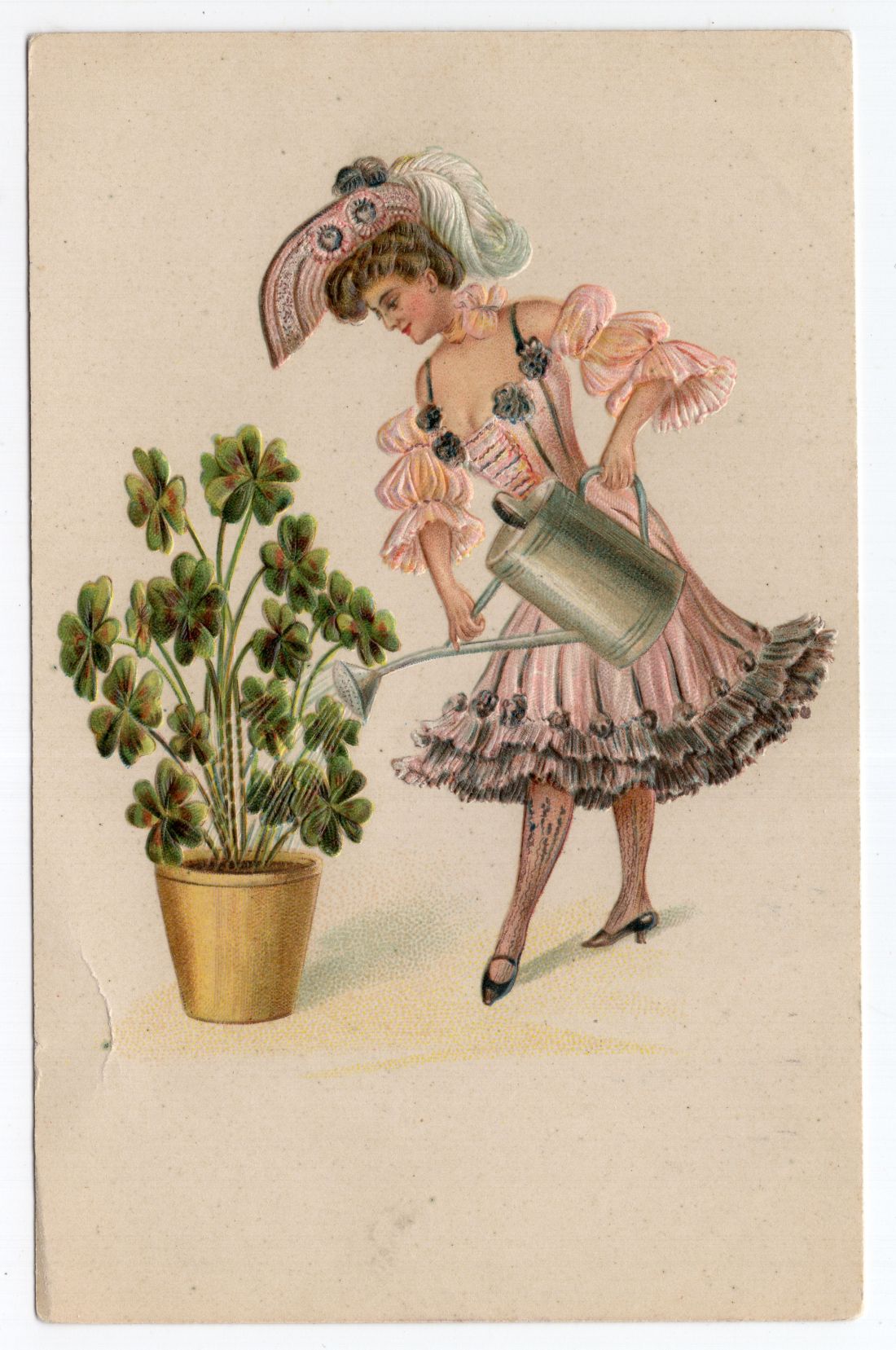
A few illustrator postcards released for hand colouring were found relating to several models in the VGP collection and are included on that website. Presented here are other, unrelated, cards for the genre which was popular in the early 1910's. Where possible, an uncolored card has been paired with a colored card. Messages on a handful of cards refer to the sender having colored the card. Where known, the artist's name has been included in the caption beneath the image.
See also the cards of Ch. Ramel.
`],["Foulsham and Banfield",`
Foulsham and Banfield
Foulsham and Banfield was a British photographic studio active from the 1900s to the 1920s, known for its portraits of stage and film stars. Photographers Frank Foulsham and Arthur Clive Banfield were based in London and specialized in glossy portraits of matinée idols.
Narrative generated by AI on 27 Nov. 2025 |
`],["G-",`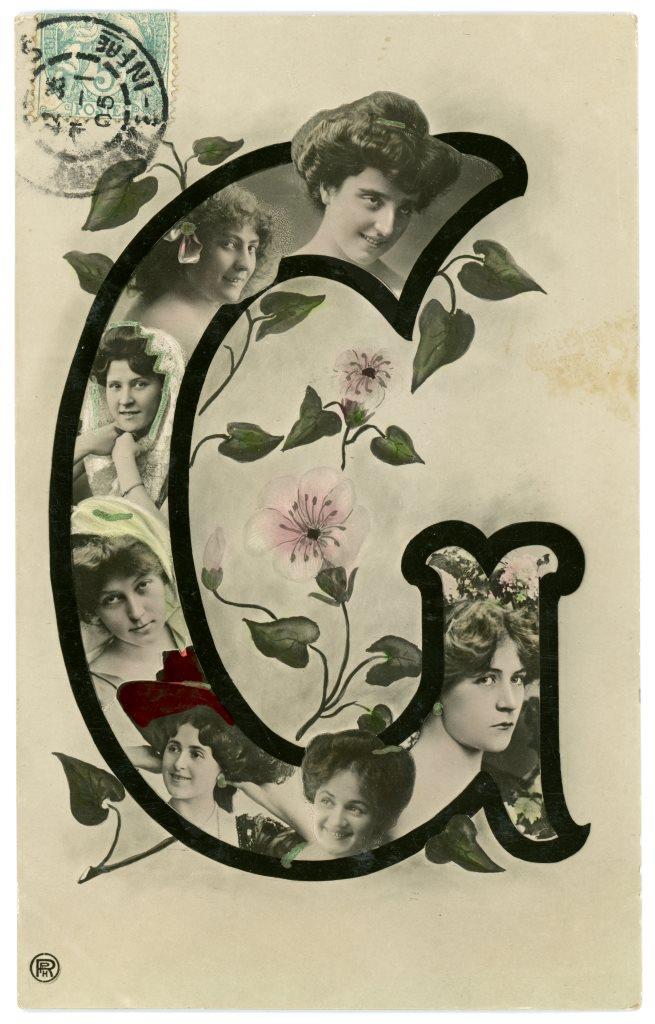 | - Initial Letter G -
Performers and other social figures whose family name begins with the letter 'G' may be accessed via the tree at the left. Where only a given name (or stage name) is known, that name is interspersed in the tree by its initial letter.
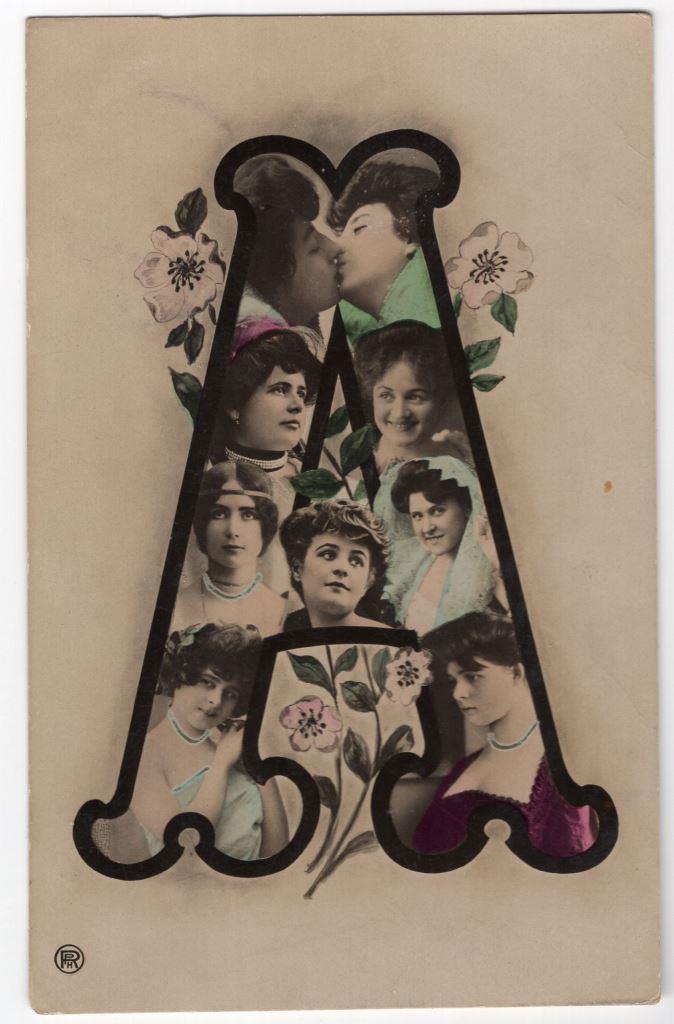
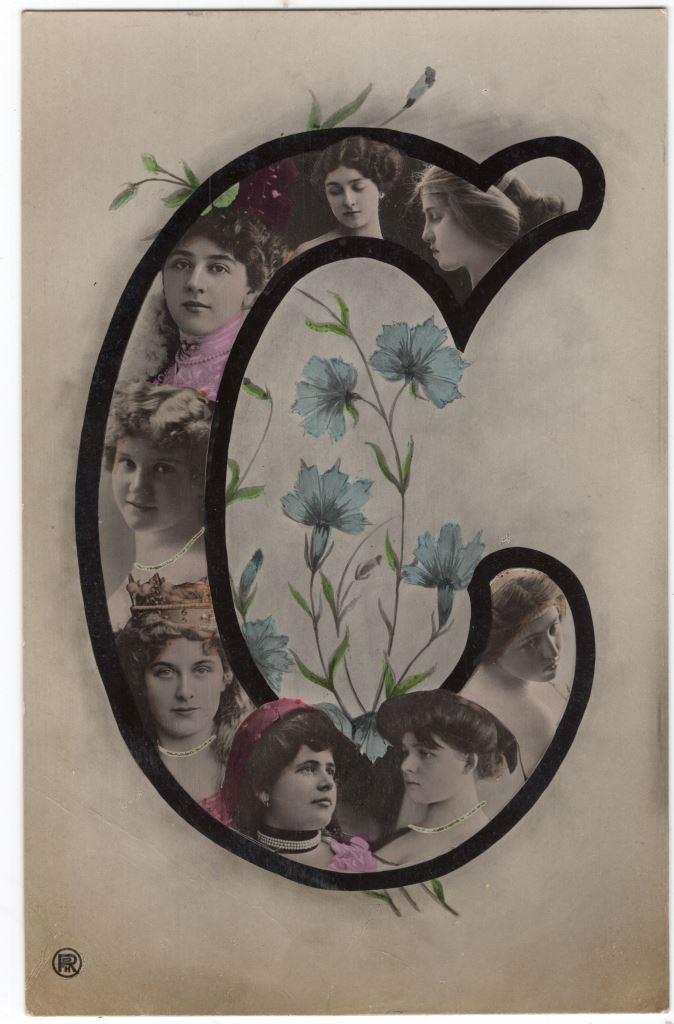
The card pictured here was produced by Rotophot in the first decade of the 20th century. Among the performers pictured on it is Liane de Vries. |
`],["Gabard",`The painter and sculptor Ernest Gabard (1879-1957) was a sergeant in the French army in WW1, and made illustrations for many wartime postcards including a humorous series. `],["Gargoyle Bohner-Wachs",`
Gargoyle Bohner-Wachs
Photos by Ernst Schneider |
`],["Geo-Fourrier",`The publisher Établissements Artistiques Parisiensproduced cards illustrating the folklore of different regions of France by a number of artists, usually in sets of 10 cards. Best known are the sets by G. Géo-Fourrier, one of which is our example. Later Fourrier moved to Brittany and produced cards which are more down-to-earth portraits of Bretons, published by "Éditions d'Art Georges Geo-Fourrier, Quimper".`],["Georges Bruyer",`The artist and illustrator Georges Bruyer was a soldier from 1914, wounded in 1915 (Croix de Guerre), convalescent until 1917 and then an official war artist. In 1915 he illustrated this series of cards issued by the Société Francais de Secours aux Blessés Militaires - the name of the French Red Cross before 1940.Drawings by him and others are collected in "Au front // 1914-1915 : numéro spécial de L'Art et les Artiste".`],["Gerlach",`
Georg Gerlach
Georg Gerlach & Co, A.G. (GGCo), Berlin, was a significant printing and publishing company in the first decades of the 20th century.
Many of GGCo's cards are marked with 'Gerlach' or 'Georg Gerlach' as a photographer's signature. The nature of the relationship between Georg Gerlach the publisher and Georg Gerlach the photographer is unknown. Whether it is one and the same person or a relative, or whether there was a photographic studio within GGCo, it is apparent there was some connection. In later years, the Gerlach photographer signture appears more frequently on postcards published by other companies.
Postcards bearing the Gerlach signature represent stage and opera performers, musicians, ice shows at the Admiralspalast, as well as a few film stars. |
`],["Gerschel",`
Charles Gerschel (1871-1948?)
Parisian photographer, Charles Gerschel, son of the photographer, Aaron Gerschel, took over the photography studio from his father in the 1890s and settled at Boulevard des Capucines then at 5 rue de Prony. A portraitist, he won a prize at the Brussels exhibition in 1910.
Source: Librairie Walden. |
`],["Glitter",`
`],["Grivoiserie",`Grivoiserie, gauloiserie are French terms describing a genre or style of art and literature, typically referring to mildly erotic, spicy, or bawdy humor, or in the case of peasant humour showing stupidity or cupidity. In postcard terms, often just crude and/or rude cartoons. We show examples by several artists.`], ["GUITRY Lucien",`Lucien Germain Guitry was born in Paris in 1860 and died there in 1925. He is considered one of the great contemporary French actors in the drama of modern reality.
He played the role of Le Coq in Rostand's Chantecler in 1910.
More information about Guitry may be found at the Encyclopedia Britannica. .`],["H-",`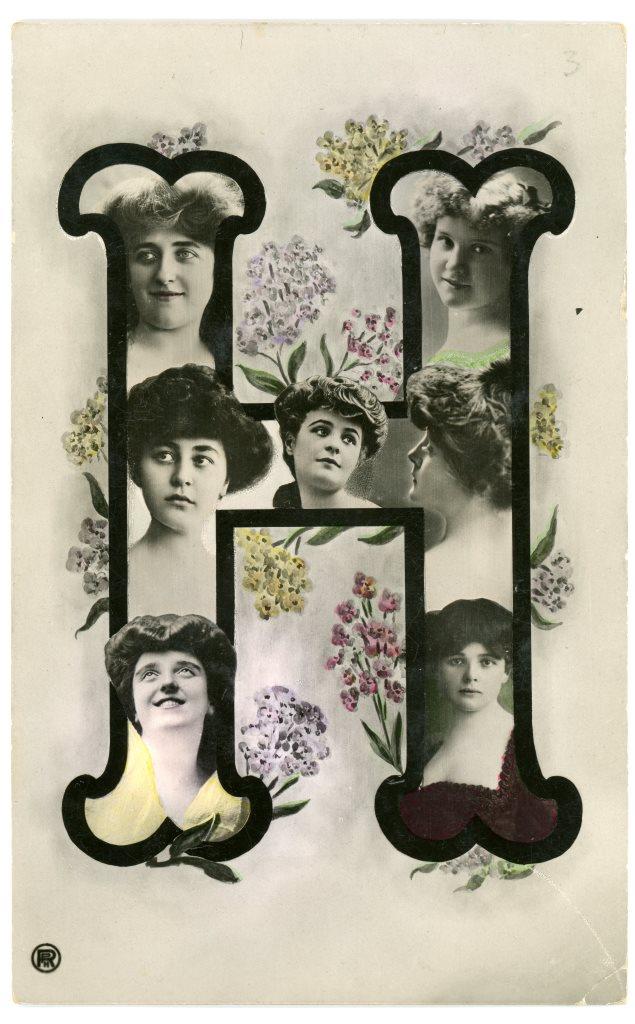 | - Initial Letter H -
Performers and other social figures whose family name begins with the letter 'H' may be accessed via the tree at the left. Where only a given name (or stage name) is known, that name is interspersed in the tree by its initial letter.
The card pictured here was produced by Rotophot in the first decade of the 20th century. Among the performers pictured on it are Geneviève Lantelme, Blanche Toutain, and Ada Battke. |
`],["Hand Tinting",`
Hand Tinting
Issued before the prevalence of color photography, photographic postcards from the first quarter of the 20th century were produced in monotone, most often in a black, sepia, or blue (Delft) tone. Less frequently produced were tonal cards in rust (rotton), green, yellow, purple, and even red. Variations in the tonal color were most likely achieved by the manipulation of chemicals during the printing process. (More tonal cards can be found in the Tonal collection on this site.)
After the cards were printed, the addition of color tinting to the monotone cards was done by hand. Little is known about the methods used, but judging from the consistently high quality of coloring on many postcards, their producers most likely employed a studio of artists who were responsible for the hand tinting.
In their 1989 book, 'Handtinting Photographs: materials, techniques, and special effects', Martin and Colbeck describe card production in Britain, and the methods they describe may be representative of the process. Coloring was aided by the use of a stencil process where master stencils were made for each of the different colors on a postcard. A team was issued stencils and ink rollers for a particular color. When that color had been handtinted on all the cards, they went to the next team for an application of a different color until the postcard was completely colored.
Whatever method used, the colors applied did not necessarily represent reality. Series GLCo 3717 is a particularly vivid illustration of the artistic license taken in the application of colors, with the dress and iris changing color from card to card.
In other instances, such as the Leo 1048 series, the colors applied within a series show more consistency. However, even when colors were consistently applied within a series, it is unknown if they were a representation of reality.
How and by whom color selections were determined is unknown.
`],["Harry Eliot",`Harry Eliot (1882-1959), artist and illustrator, was born Charles Edmond Hermet in Paris. Like Sandy Hook he adopted an English name for his work, which was evidently inspired by earlier English sporting illustrations. He painted in watercolour, his work appears in books and magazines, posters and on postcards. There are articles on Eliot in both the English and French Wikipedias, but the best reference is the Harry Eliott club (in French) which includes more details and many illustrations.Much later, various designs by Eliot were published by Barré-Dayez.`],["Hats",`
Hats
High fashion and sometimes exaggerated hats are frequently depicted on postcards circa 1910. A number of the photos on these cards also appeared in the fashion section of magazines, along with brief descriptions of the hat. Click on an image to view citations to these magazines profiles. Translation assistance provided by Catherine Jansen, Amsterdam - The Netherlands. |
`],["Henri Boutet",`Henri Boutet (1851-1919) was a graphic artist and printmaker, mostly intaglio prints of contemporary women, often déshabillé. In a different vein in 1902 he produced a series of hand colored drypoint prints "Les Modes féminines du XIXe siècle". Much of his work appears on postcards. Most of the cards show no logo, some have totally blank backs but some have the Piprot "GP" monogram or the Kunzli logo so several publishers were involved as well as the ones shown here. Boutet produced patriotic illustrations in WW1. `],["Henri Manuel",`
Henri Manuel
Henri Manuel (1874–1947) was a French photographer who served as the official photographer of the French government from 1914 to 1944. In 1900, Manuel opened a portrait studio in Paris with his brother Gaston. A respected photographer of people from the worlds of politics, art and sports, as well as a photographer of art and architecture, Manuel's photos were used by news agencies. The studio became the largest photographic studio in Paris and a leading center for aspiring photographers. In 1925, the brothers expanded their business into fashion photography.
By 1941 the studio had produced over a million images, spread between fashion photographs, news agency photographs, personal portraits and other images. The studio was closed during World War II, and most of the photographic plates were destroyed.
Source: Wikipedia. |
`],["Herbert Schultz",`Herbert Schultz (1884-1966) was based in Berlin. His many postcard illustrations of children for various publishers are in the style of the examples but he also produced accurate and highly finished work, eg illustrations of the coachwork of 1930s motor vehicles. He typically signed his work with H S B in an arc or as HSB with the S larger, but sometimes as in the card for A.V.Schwert used more of his name. `],["HERZBERG Martin",`
Martin Herzberg
Martin Herzberg was born in 1911 in Berlin, Germany, of Jewish heritage. He began work as a child model at the age of six. Shortly before the end of WWI he was discovered for film, appearing in over 30 films during the silent and early sound eras before 'retiring' from film at age nineteen. After ending his film career, Herzberg left Germany for the Canary Islands. In 1931 he held an acting seminar with the actor, director and dramatist Eugen Herbert Kuchenbuch. When the Nazi's took power in Germany, Herzberg remained in Spain.
During his adult life, Herzberg worked as a photographer in Tenerife. He also was a screenwriter for the 1940 Spanish film, Gloria del Moncayo. Herzberg married while in the Canary Islands and had a son who was born in 1955. Herzberg died circa 1972.
German Wikipedia provides general biographical information under the entry Martin Herzberg (Schauspieler). Herzberg's id was made by Berlin collector, Werner Mohr, from several childhood photos. |
`],["Heureuses Paques",`
`],["Horses",`
`],["How coloured cards were made",`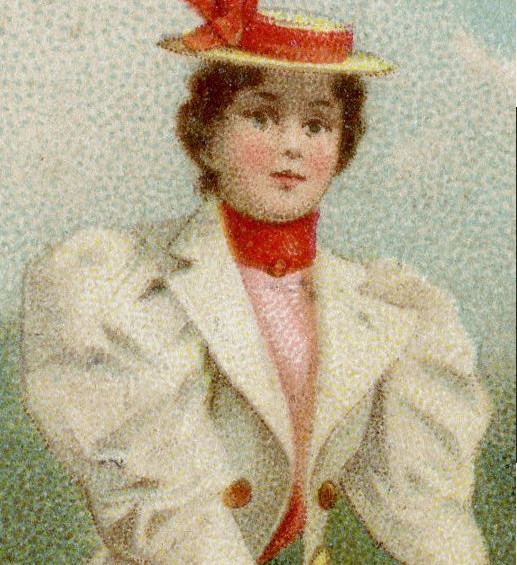 | HOW COLOURED CARDS WERE MADE Coloured postcards were available from the start of the postcard age. Initially this required skilled manual input in production, for both illustrations and cards based on photographs. For the latter this added to the cost and it was common for cards to be sold at different prices in coloured and uncoloured form. The subsections give brief details of some of the processes used |
`],["I-",`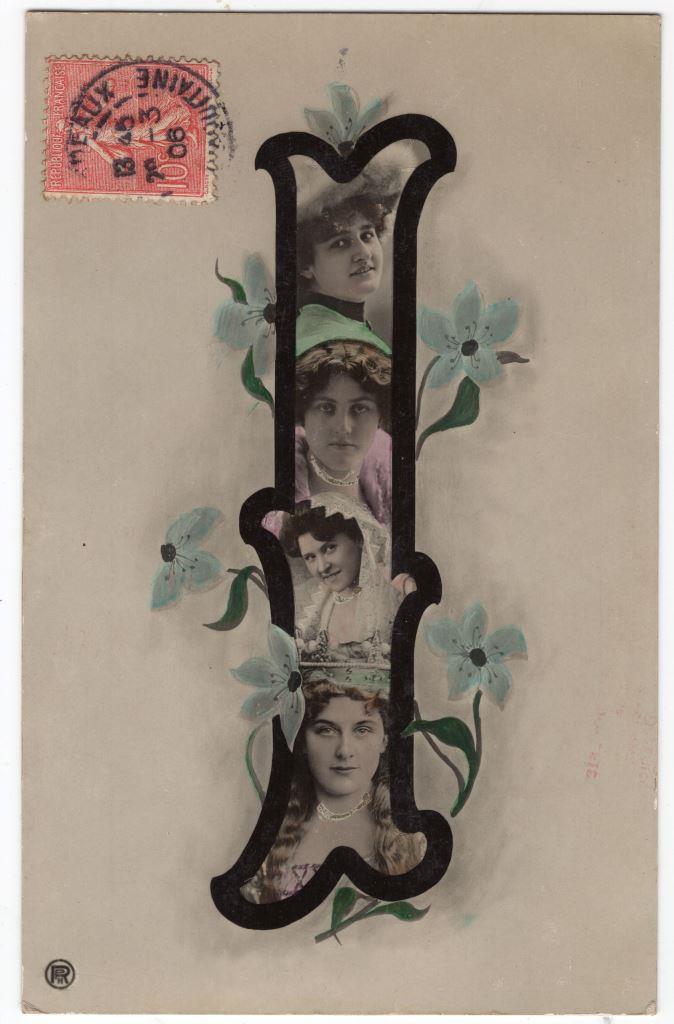 | - Initial Letter I -
Performers and other social figures whose family name begins with the letter 'I' may be accessed via the tree at the left. Where only a given name (or stage name) is known, that name is interspersed in the tree by its initial letter.
The card pictured here was produced by Rotophot in the first decade of the 20th century. Among the performers pictured on it is Geraldine Farrar. |
`],["Illustrators.",`Here are some examples of the illustrated cards which appear on this site, with some information and references for the artist. Obviously this is hardly comprehensive. For an extensive survey seethe section of what was on the Metro postcard site and is now to the best of my belief only available on the wayback machine via this link. (Let us know if this is wrong). This was produced by Alan Petrulis,himself an artist, which explains the criteria used. Here we are less critical.
To see more of an illustrator and some information about them view the subtopic.`],["Italian regimentals",`
Italian Regiments
We are talking here of postcards from the first few years of the ninteen-hundreds. A large number of Italian regimental postcards were printed for collectors. These typically included campaign scenes from the nineteeth century, regimental symbols and activities, and elaborate allegorical references. The best ones were lithographically printed in many colours, often including gold and silver. These expensive cards were aimed at collectors and some may have been commissioned by regimental associations. Later on cheaper cards were produced using half-tone printing. Many of the designs also exist as stamps, some of which are unfortunately forgeries. Here is an article which show examples of stamps and cards, with further explanation. The cards shown are mainly from the pclogos site, where details of the publishers and the address sides of the cards may be seen. |
`],["J-",` | - Initial Letter J -
Performers and other social figures whose family name begins with the letter 'J' may be accessed via the tree at the left. Where only a given name (or stage name) is known, that name is interspersed in the tree by its initial letter.
The card pictured here was produced by Rotophot in the first decade of the 20th century. Among the performers pictured on it is Blanche Toutain. |
`],["Jacob Schloss",`
Jacob Schloss
Jacob Schloss was born in Germany in 1856 and brought to America as a child. He was educated at the Cooper Union as an etcher, graduating in 1872. In the mid-1870's Schloss worked at Benjamin J. Falk's W. 24th Street studio as a photographer. When he went independent, Schloss, like Falk, specialized in theatrical photography.
Schloss joined other photographers in relocating to Fifth Avenue at the turn of the 20th century. His studio spread across 467 & 469 5th Avenue. As the market shifted from sales of celebrity cabinet cards, Schloss' business became insufficient to support the lease on Fifth Avenue. He moved to a small space on Broadway. He kept his studio open until 1928, serving walk-in customers as a portraitist as his health declined. He died at age 82 in 1938.
Schloss was the staff photographer for the photographic periodical, Broadway Magazine. Like Falk, Schloss was an activist for photographers' copyrights.
Extracted from a more complete biographical sketch at the Broadway Photographs website. |
`],["Jenny Nyström",`Jenny Eugenia Nyström (1854-1946), Swedish. As well as on many postcards her illustrations apppeared in books and magazines. `],["Jewel",`
`],["Johnston and Hoffmann",`
Johnston and Hoffmann
Johnston and Hoffmann was a photographic studio primarily based in India, founded in Calcutta in 1882 by P.A. Johnston and Theodore Julius Hoffmann. They served a British clientele, including officers and dignitaries, and produced work for various British publishers, such as the Rotary Photographic Series. They had branches in Darjeeling, Shimla, and Rangoon, as well as in London on Devonshire Street.
Narrative generated by AI on 28 Nov. 2025 |
`],["Jupe Culottes",`
Jupe Culottes
The 'jupe-culotte' was introduced in late 1910 by the Paris couturier Paul Poiret and was a sensation. It attracted scandal and ridicule, and it appears in many postcards of the time. Feminists liked it as it provided advantages such as being able to stride over obstacles and mount vehicles more easily, as shown in some of the photographic cards. Illustrations include many cartoon-like cards making fun of it. |
`],["K-",`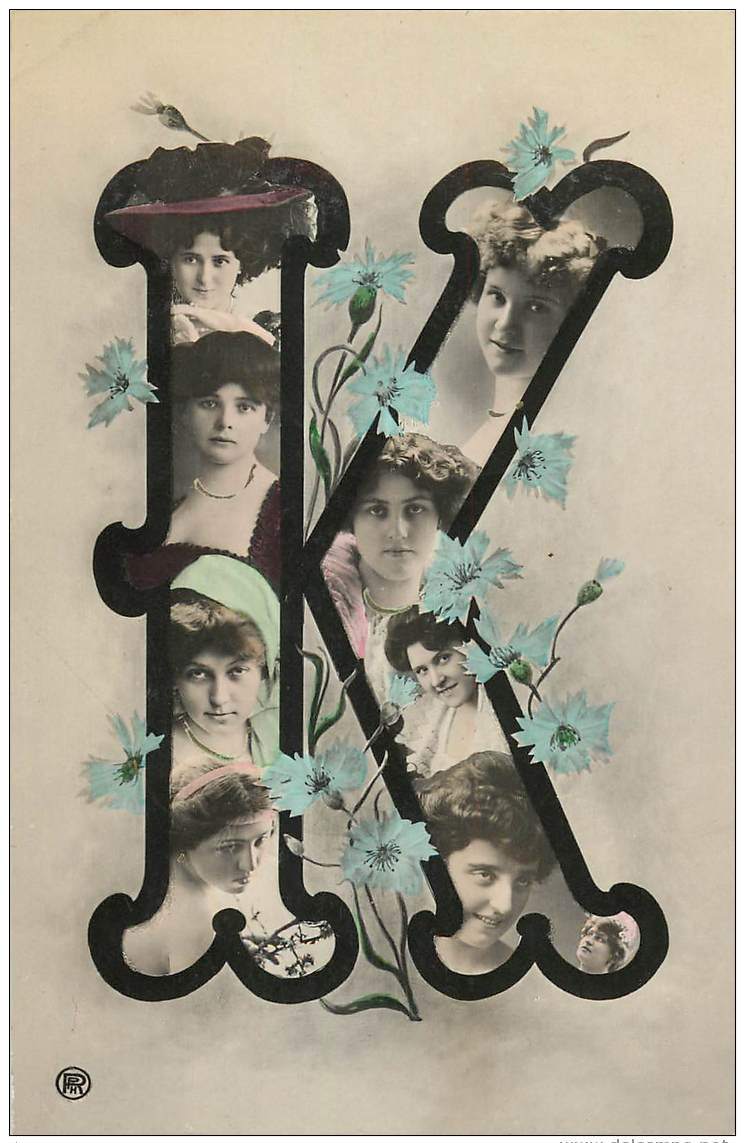 | - Initial Letter K -
Performers and other social figures whose family name begins with the letter 'K' may be accessed via the tree at the left. Where only a given name (or stage name) is known, that name is interspersed in the tree by its initial letter.
The card pictured here was produced by Rotophot in the first decade of the 20th century. Among the performers pictured on it is Liane de Vries. |
`],["Kiesel (Berlin)",`
Atelier Kiesel
Atelier Kiesel was a renowned photo studio in Berlin during the 1920s. Little is known about the history of Kiesel, but many of its portraits of German film stars have been preserved through the postcards of Ross Verlag, Iris Verlag, and other postcard publishers. These cards may be viewed on the Ross Verlag Movie Star Postcards website.
The connection of Kiesel to H.E. Kiesel, a Berlin photographer whose work appears on a number of postcards (particularly Regel & Krug) from the 1910's, is assumed, but has not yet been confirmed. A logo for H.E. Kiesel is included below, documenting it was a Berlin studio. |
`],["L-",`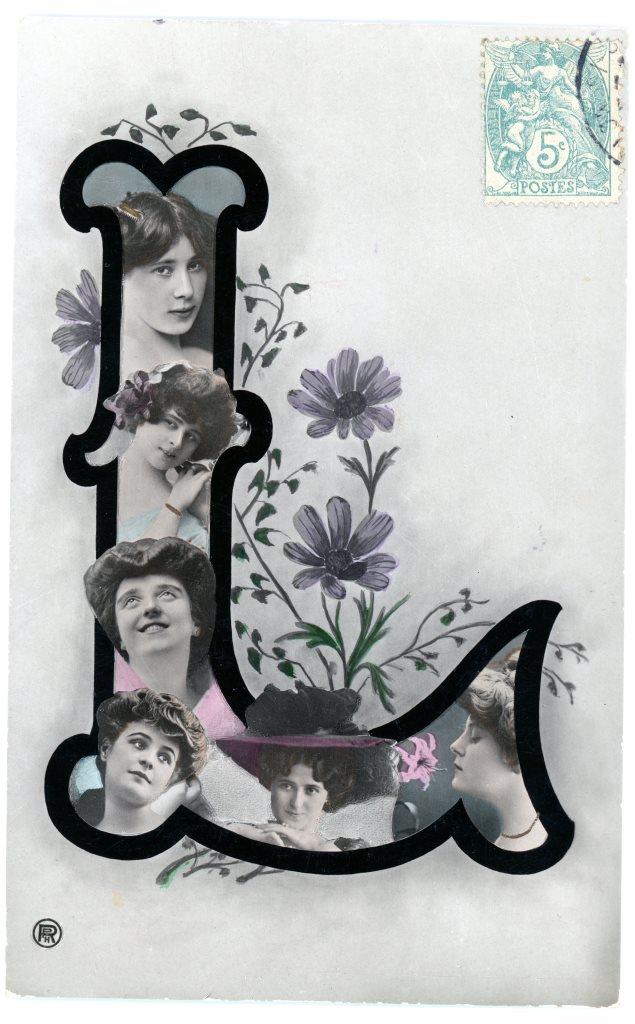 | - Initial Letter L -
Performers and other social figures whose family name begins with the letter 'L' may be accessed via the tree at the left. Where only a given name (or stage name) is known, that name is interspersed in the tree by its initial letter.
The card pictured here was produced by Rotophot in the first decade of the 20th century. Among the performers pictured on it are Elise de Vère, Blanche Toutain, Liane de Vries, and Ada Battke. |
`],["L. Gutmann Wien",`
Ludwig Gutmann
Ludwig Gutmann (1869-1943) was an Austrian photographer. In 1903, he began working in the Viennese studio of Nikolaus Stockmann, becoming a partner in 1904. After Stockmann's death in 1905, Gutmann registered the business in his own name. From 1903 to 1914, he was a member of the Austrian Photographers' Association, where he served on the board.
Gutmann specialized in theatrical photos and was the undisputed "king of commissions" in the period leading up to the end of WWI. Gutmann adhered to the tradition of studio photography, having the opera and operetta singers perform their repertoire of poses in front of a white or painted background, parallel to the camera. Under studio conditions, these photographs were technically brilliant.
In 1939, after the annexation of Austria, Gutmann's business was Aryanized and his name was removed from the trade register. On August 28, 1942, Gutmann was deported to the Theresienstadt Ghetto where he was murdered on April 18, 1943.
Source: Wikipedia. |
`],["La Carte Postale",`
`],["La Collectionneuse",`
`],["LAFRENZ Susanne",`
Susanne Lafrenz
Susanne Lafrenz was identified from an advertisement for 'Lottes erste Liebe'., a Bubi film, in the November 1916 issue of Lichtbild bühne (see RPH 5615/1). The German Early Cinema Database and FilmPortal.de document Susanne's appearance in several other Bubi films in the role of Lotte.
In addition to performing in the Bubi films, Susanne was active as a postcard and magazine model. Several of her magazine photos were attributed to Ernst Schneider, the Berlin photographer. It is likely that many of her postcard series were photographed by him as well.
No additional biographical information about Lafrenz has been found. |
`],["Le Petit Trottin",`
`],["Les Camelots",`
`],["Les Filles de Jupiter",`
`],["LE BARGY Simone",`
Simone Le Bargy
Simone Le Bargy (or simply Madame Simone after her divorce from actor Charles Le Bargy), made her theater debut in 1902. As an author in addition to a stage actor, her life spanned 108 years, from 1877-1985. She played Faisane in Rostand's Chantecler in 1910.
More information may be found at the Académie d'Angoumois. |
`],["Lined up",`
Lined up
This isn't a set as such, just a small collection of cards I like with a common theme. |
`],["Lizzie Caswall Smith",`
Lizzie Caswall Smith
Lizzie Caswall Smith (1870–1958) was an early 20th-century British photographer who specialised in society and celebrity studio portraits, often used for postcards. She was associated with the Women's Suffrage movement and photographed many suffragettes including Flora Drummond, Millicent Fawcett and Christabel Pankhurst. She also photographed actors including Henry Ainley, Camille Clifford, Sydney Valentine, Billie Burke, and Maude Fealy.
Source and additional information: Wikipedia . |
`],["Loir Luigi",`Luigi Loir (1845-1916), French. Artist who counts as an Illustrator as he produced work for adverts - posters and postcards. The examples were for the biscuit firm L-U. These are works of art, not views! Originals are around 20 by 30 cm, watercolour and gouache. The cards were produced in chromo-lithography by Pecaud.`], ["M-",`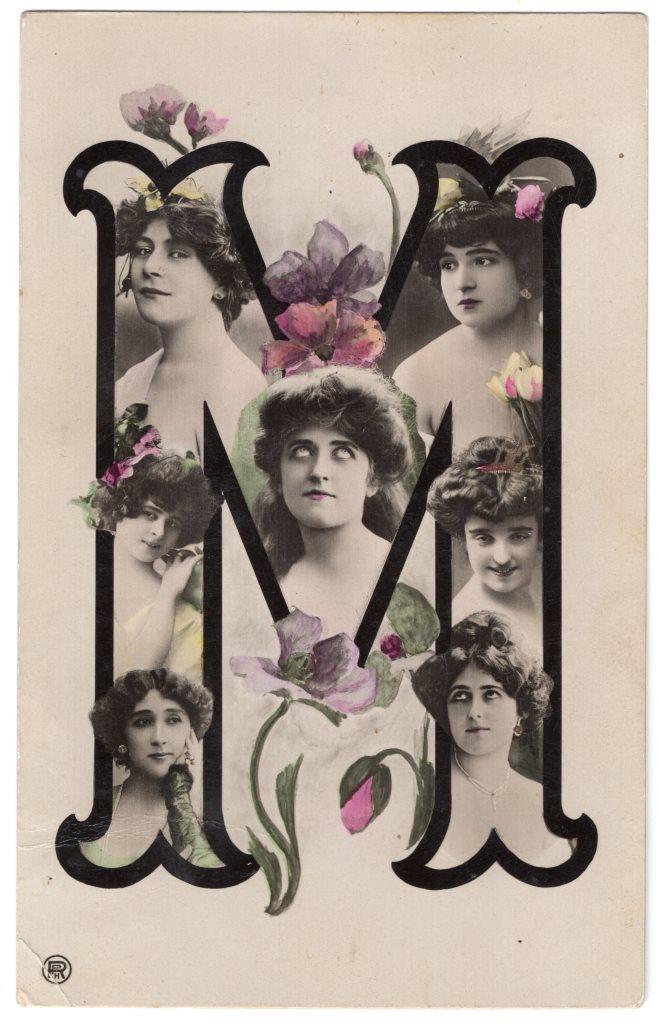 | - Initial Letter M -
Performers and other social figures whose family name begins with the letter 'M' may be accessed via the tree at the left. Where only a given name (or stage name) is known, that name is interspersed in the tree by its initial letter.
The card pictured here was produced by Rotophot in the first decade of the 20th century. Among the performers pictured on it are Elise de Vère, Carolina Otero and Liane de Vries. |
`],["Machine processes",`
Machine processes
Displayed below are examples of the two most common photomechanical processes of the period, half-tone and photogravure. |
`],["Marmonier",`Marmonier signed with his name and also sometimes the pseudonym Mille, which he used in the coloured series L'Arc en Ciel between September 1904 and November 1906. This had over 100 issues on international political themes.`],["Maurice Pepin",`(ca 1890-1940) was a French "Glamour" artist whose work appeared widely in magazines, on covers and elsewhere. Postcards are typically from the 1920s. He had illustrated patriotic cards during WW1, published by Gallia.`],["Mauzan",`Achille Lucien Mauzan (1883-1952) was French but spent much of his working life in Italy. He worked as a commercial artist, though he also painted and sculpted in a less representational way. Like others whose work appears on many postcards (about a thousand in his case) his main source of income must have been elsewhere; he designed around two thousand posters for example.`], ["Max Bruning",` Max Brüning was a fashionable artist in Berlin in the 1920s when he made a series of etchings in these colours. (By fashionable I am not intending to be dismissive, I just mean he was current and popular at the time.) They are are of women, some in erotic poses. They were reproduced as postcards, all with a logo of crossed F's, some having "Printed in Saxony" in the stamp box. It could be a logo created by a publisher for this series.`],["Mechanical",`
`],["Meilleur Souhaits",`
`],["Miethe Phot",`
Adolf Miethe
Adolf Miethe (1862–1927) was a German scientist, lens designer, photochemist, photographer, author and educator.
He co-invented the first practical photographic flash and made important contributions to the progress of practical color photography. His color process made it possible to expose the same scene to three different negatives through different colored filters. Each negative was then exposed to a different plate in the printing of postcards with the resulting image displaying the actual colors of the scene. The cards below are examples of this method.
Source and additional information: Wikipedia. |
`],["Military Humour",`
Military Humour
The cards here are examples of the humour of the military life. Some are members of very extensive series. A few wartime examples are included but as is natural most wartime cards go beyond this kind of humour. |
`],["Moreau-Kivatizky",`
Moreau and Kivatizky
René Moreau was a French photographer in the Paris region at the turn of the 20th century. Circa 1905-6 he partnered with Mark Fedorovich Kivatizky, with the signature 'Moreau & Kivatizky' appearing on many postcards. The partnership ended shortly thereafter, with Kivatizky continuing with photography until 1924 in Paris and later in Turin. The tracing for Moreau is not clear.
On 9 March 1873 Mark Fedorovic (Mordouch Fišelevic) Kivatitzky was born into a Jewish family in Poltava, Russia (now Ukraine). In 1893, he began his career as a photographer, moving to Melitopol and opening his own studio there. In 1897, he joined the Russian Photographic Society in Moscow, which awarded him twice for his work. A few years later, in 1901, he opened a photographic studio in Ekaterinoslav where he produced works of excellent quality which were given awards by the Vitebsk Photographic Circle and the Photographic Society of Saint Petersburg. In 1905, at the second Kiev photographic exhibition he won first prize for his works.
Kivatitzky emigrated to Paris and opened the photographic studio 'Moreau & Kivatitzky', which produced postcards, photographs from the First World War, and photos of female figures. Kivatitzky's studios in Melitopol and Ekaterinoslav continued to operate after he settled in Paris on the Boulevard d'Italien in 1905, and were managed by his brothers, Joseph and Moses.Moving to Turin with his wife in 1924, Kivatitzky collaborated with the company Fotocelere A. Campassi which had been founded in 1908 by Angelo Campassi and was a company famous for the manufacture of silver bromide postcards. Kivatitzky remained there to work for fifteen years until he was deported to Auschwitz during World War II where he died on 2 November 1943.
Sources: ebay seller record - AmidesLivres-Boutique (Date retrieved: 5 Oct 2025); 'Russian presence in Italy in the first half of the 20th century' Publisher: ROSSPEN, Moscow, 2019. P. 331. Research and Russian translation provided by Marina Dambrava (Portugal). |
`],["Moving Eyes",`
`],["Moving Parts",`
`],["Music Ads",`
`],["N-",`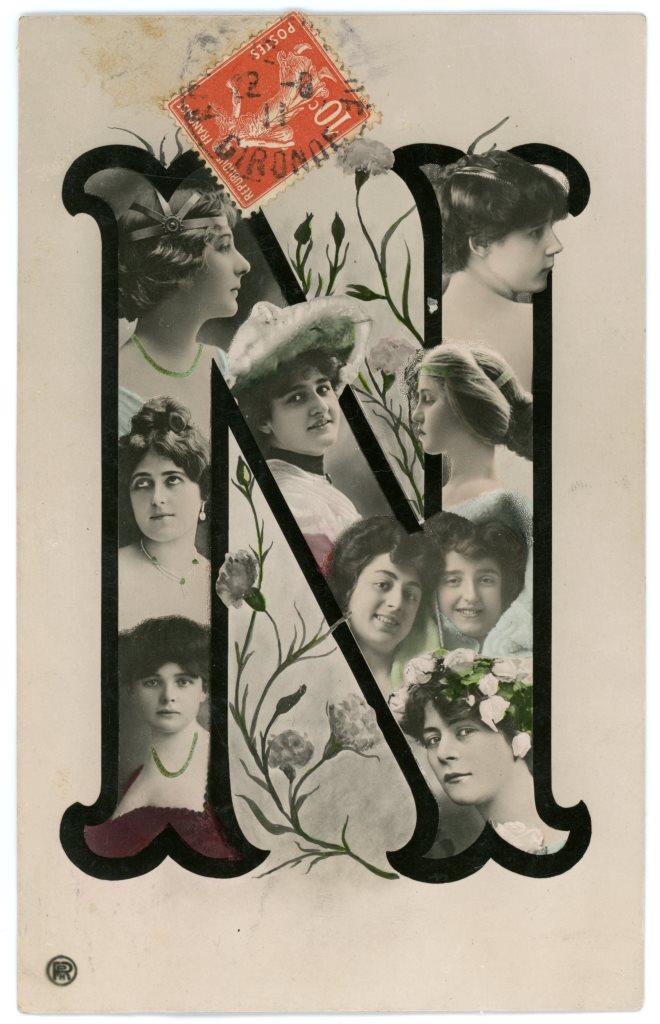 | - Initial Letter N -
Performers and other social figures whose family name begins with the letter 'N' may be accessed via the tree at the left. Where only a given name (or stage name) is known, that name is interspersed in the tree by its initial letter.
The card pictured here was produced by Rotophot in the first decade of the 20th century. Among the performers pictured on it are Suzanne Miéris and Liane de Vries. |
`],["Nadar",`
Paul Nadar (1856-1939)
The son of celebrated photographer Félix Nadar, Paul Nadar became manager of his father's Paris studio in 1874. A rocky relationship between father and son resulted in an estrangement around 1885, although the following year they collaborated on what is believed to be the first photo-interview: The son was the photographer and the father the interviewer; their subject was 101-year old chemist and color theorist Michel-Eugène Chevreul.
In 1895, Paul's father turned over the Paris Nadar Studio to him.
Narrative by:Getty Museum Collection and Wikipedia. |
`],["Naillod",`Charles Marie Alexandre Naillod (1876-1941) was a French painter, engraver and illustrator. His postcards are typically of Fashionable Parisians. He did other commercial work and also exhibited at theSalon des indépendants, of which he became secretarary in 1926. Drawing from the French Wikipedia, which has other interesting details, he was mobilized in 1914 at the age of thirty-eight as a reserve sergeant, and assigned to a territorial regiment as a pigman. He was wounded twice and received the Croix de Guerre and the Military Medal.`],["Nicknames.",`| The postcards below show the models whose names are not known and who have been given 'nicknames' to identify them where they occur on this site. Nicknames were introduced by Jean in the Ross database as "Descriptive names" for people, often children, who appear on many cards but whose name in unknown. We use these same names here. The description is based on one photo or set so don't take it too literally. From time to time actual identities have become known and nicknames become unneccesary. Recent cases are Susan LaFrenz, Blandine Ebinger and even the Reinwalds - see their individual writeups. Do let us know if you have information about any of the ones below. |
`],["Novelty cards.",`
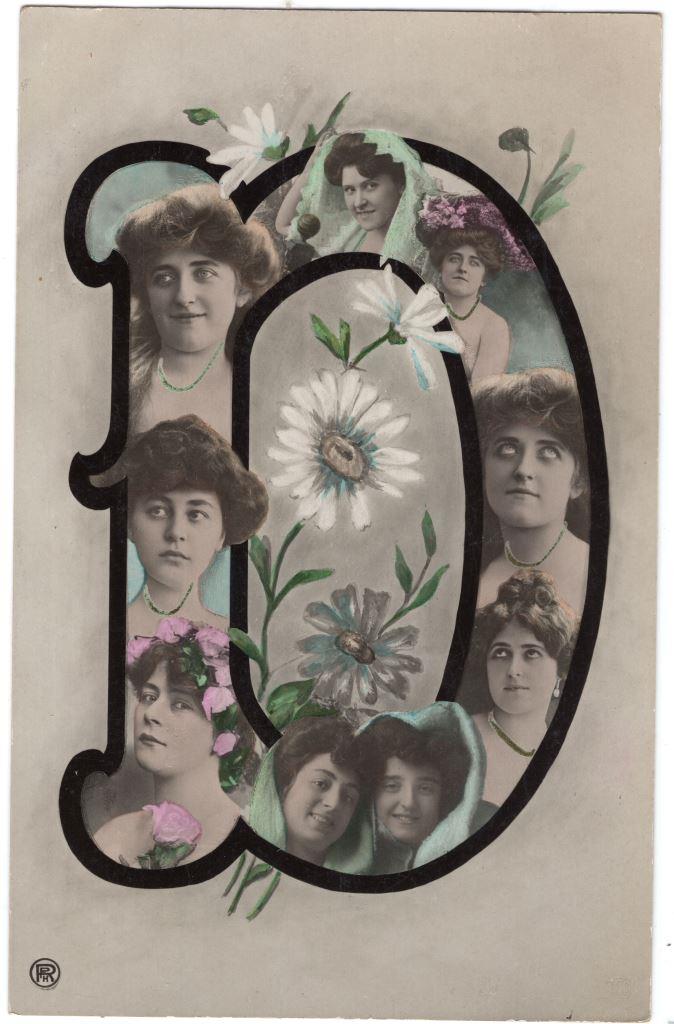
`],["O-",`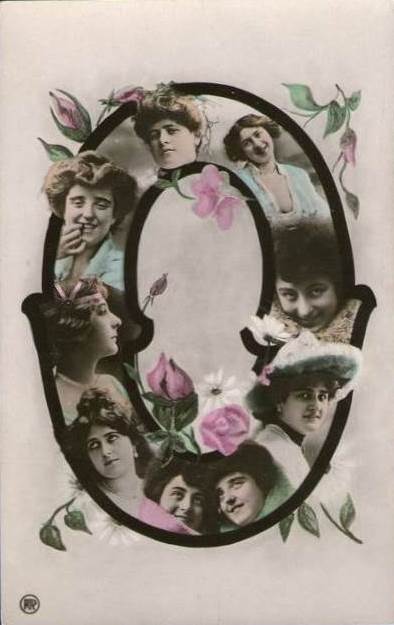 | - Initial Letter O -
Performers and other social figures whose family name begins with the letter 'O' may be accessed via the tree at the left. Where only a given name (or stage name) is known, that name is interspersed in the tree by its initial letter.
The card pictured here was produced by Rotophot in the first decade of the 20th century. Among the performers pictured on it are Suzanne Miéris and Liane de Vries. |
`],["Obsession de Facteur",`
`],["Ogerau Phot",`
Charles Ogerau
Charles Pierre Ogerau (1868-190) was born in Paris and was a French photographer. He opened a photography studio at 18 Boulevard Montmartre, specializing in portraits of women in show business. Ogerau was also an active member of anarchist circles in the early 20th century.
Narrative by: Wikipedia. |
`],["Orens",`Orens postcards are in the political area using black-and-white graphics. Charles Orens Denizard (1879-1965) went at a young age from working in a print shop in Amiens, via school, to the Ecole des Beaux-Arts in Paris where, studying graphic techniques as well as painting. The politics of the time, which included the Dreyfus affair, triggered his prolific postcard phase. He signed his work 'Orens' (apparently sometimes ‘D’Nizard’).
He went on to produce cards in limited sets. A specific series was Le Burin Satirique, engraved satirical cards issued in Paris in 1903. Orens was only 23 at the time. The cards are etchings on quality paper. The series was launched to produce 100 cards a year, 250 copies of each, plus up to 20 proofs etc. There is a good account at journals.openedition.org/estampe/1090 with many illustrations. `],["Oricelly Phot",`
Jean Oricelly
Jean Simon Oricelli was born in 1869 in Corsica, the youngest of seven children. Orphaned in his mid-teens, Oricelli signed a five-year voluntary enlistment contract. He left his regiment in 1890, settling in Paris where he worked as a photographer's assistant. Shortly after his marriage in 1896 at the age of 27, he opened a photography studio under the name Oricelly, located near Madeleine, Printemps, and the Gare Saint-Lazare. Oricelly specialized in portraits of artists (primarily women) in flattering stage costume. He first produced portraits in cabinet card format, then, to reach a wider audience, supplied his photographs to postcard publishers.
Oricelly's business flourished during the first 10 years of the 20th century during the golden age of postcards. As the medium lessened in popularity, Orcelly's business slowed, and he doesn't appear to have been very active after the World War I. In the autumn of 1927, having ceased activity, he dispersed his equipment. In 1932, he put his business up for sale; it is not known if it was sold. In 1939, Oricelly filed a request for assistance.
Source: Portrait Sépia. |
`],["Other Animals",`
`],["Other topics",`Cards I would like more of? One can't collect everything! However among the cards I happen to have these are ones which fall into topics I could easily add. They may be of interest to collectors or potential collectors of these subjects. Each topic has relatively few cards, added as I find them; they are fairly random apart from a pre-war date.`],["Otto Sarony",`
Otto Sarony
New York
Otto Sarony (1850–1903) was an internationally known portrait photographer and the owner of a celebrity photography business. His father was Napoleon Sarony, the premier theatrical photographer of the 19th century. Sarony the Younger, as he was known, continued the family business.
Narrative by: Wikipedia. |
`],["P-",`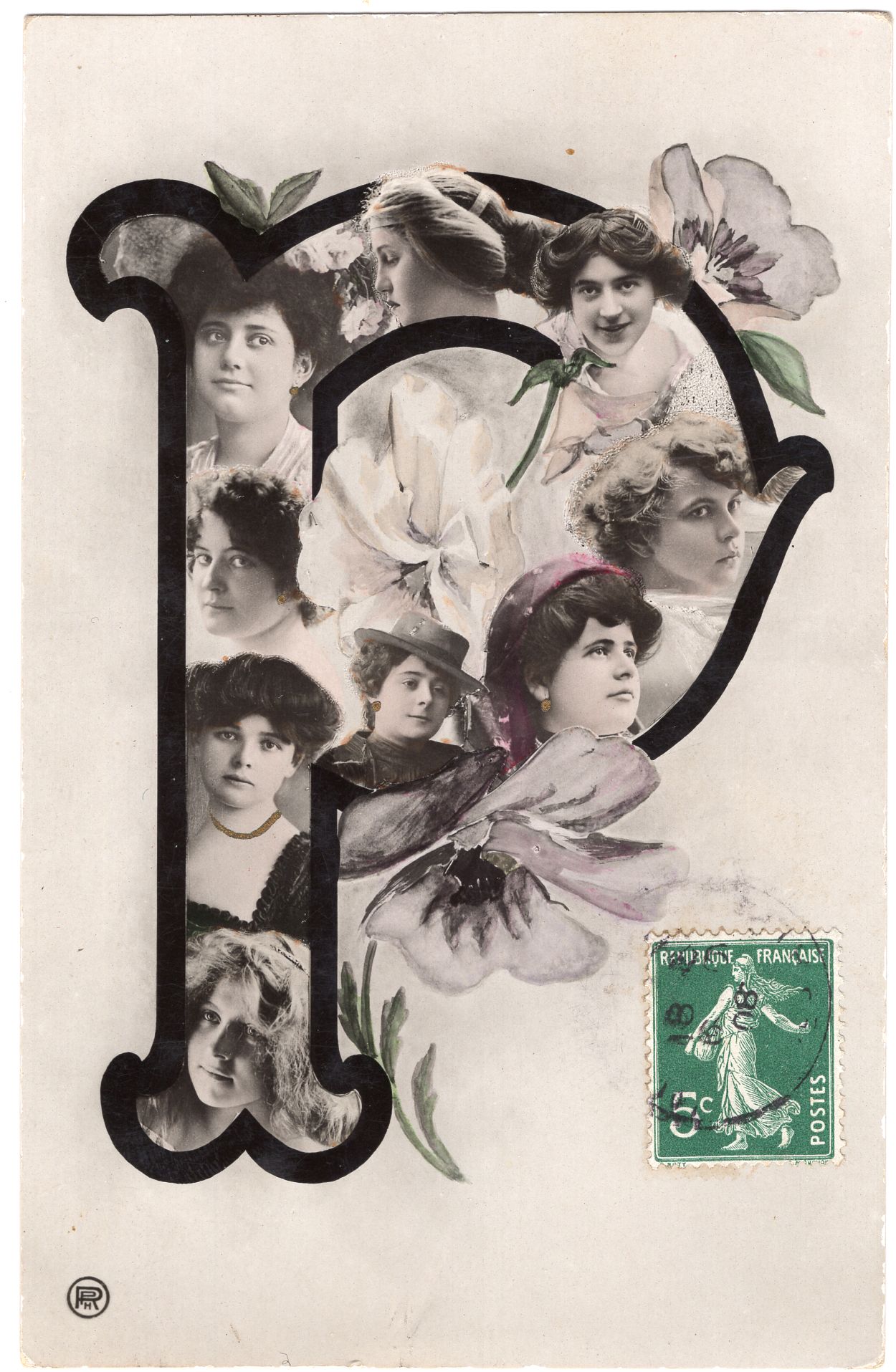 | - Initial Letter P -
Performers and other social figures whose family name begins with the letter 'P' may be accessed via the tree at the left. Where only a given name (or stage name) is known, that name is interspersed in the tree by its initial letter.
The card pictured here was produced by Rotophot in the first decade of the 20th century. |
`],["Paint Marker",`
`],["Panorama de Paris",`
Edition du Panorama de Paris
These are undivided cards from the very early 1900s. The whole edition seems to run to 48 cards, Les Saisons and Baigneuses. They are not at all what the word Panorama suggests. Maybe the publisher was based in the Passage des Panoramas Paris, which was noted for stamp and postcard dealers at this time.
Many (if not all) of the cards are photos by Reutlinger, his signature appears on one of the cards but there are modern reproductions showing many of the bathing scenes with his signature and SIP also published some signed versions. The series uses photomontage. |
`],["Paques (Eggs)",`
`],["Particular Sets we Liked.",`
`],["Paul Boyer",`
Paul Boyer
Paul Boyer (1861–1952) was a French photographer at 35 Boulevard des Capucines in Paris, the same location where Nadar, forty years earlier, had photographed celebrities. Boyer didn't possess Nadar's talent, but he was a shrewd professional who knew how to manage his business. He was the official photographer for the Presidency of the Republic, and he contributed to the first collection of portraits of prominent figures featured in Félix-Potin chocolate bars. Numerous artists posed in his studio on Boulevard des Capucines.
Circa 1905, Boyer partnered with Auguste Bert. They worked together until circa 1910 when Boyer left the business. After ending his photography career, Paul Boyer became an architect, as his father had been before him.
Source: Portrait Sépia (entry for Auguste Bert). |
`],["Paul Sielaff",`
Paul Sielaff
Biographical information for Paul Sielaff has not been found. His photos appear on German postcards and in German magazines circa 1910-1920.
Sielaff is listed in Berlin address books from 1906 and 1907 with Alexander Schmoll, doing business as Schmoll & Sielaff, with studios listed on both Belle Alliance and Tauenzienstr. In 1908, the address book entry finds Schmoll alone on Belle Alliance and Sielaff alone on Tauenzienstr. Sielaff's entries on Tauenzienstr run through 1921 when the address book lists Albrecht as the successor to the business which is listed as Zigarren. It is unknown whether Sielaff moved on to something else, retired, or died.
The BNK and SLJFF cards below bear Sielaff's name on the face of the card. The NPG 2185 photo was reproduced in an issue of Das Theater, with credit given to Sielaff. The NPG 2214 photo features the same backdrop and model as Sielaff credited photos in the same publication.
Of particular interest is the trademark that is reproduced on several cabinet cards issued during the short period of Schmoll & Sielaff's collaboration. Featured in the trademark is a child who appears on hundreds of postcards circa 1907. It is not known if Schmoll and/or Sielaff produced these photos, but the use of the child's image in their trademark is intriguing. The child has been given the descriptive name 'Balloon Girl'; samples of her cards are provided in the contact sheet below. Full size scans may be seen on this site. |
`],["Pauli Ebner",`Pauli (Paulina) Ebner (1873-1949) was an Austrian artist and illustrator, with many postcards showing scenes of lively children. She has her own fan-site on the web.`],["People",` | This is a long list! The searches carried out on this site cover the cards occuring here in the various "blog" topics, which are normally just a selection which we have chosen, and also the cards in our sister site "Vintage German Postcards". That covers twelve major German publishers of the early 20th century in a much more comprehensive way, and these publisher produced a very large number of cards of the performers of the time, almost all female. Together with the cards on the Ross site, which is also searchable by name, you have a fairly comprehensive coverage of those who performed in Europe before WW1.
The names is the list are arranged Surname first.. |
`],["Petit Trottin",`
Petit Trottin (The Little Errand Girl)
A series by A Bergerac. The title refers to the song with music by Desiré Dihan and lyrics by Achille Melandri written in 1893, now known only because the cover of the sheet music was a lithograph by Henri Toulouse Lautrec. The image is easier to find online than the song, though you could buy a copy from here. |
`],["Pets and Other Animals",`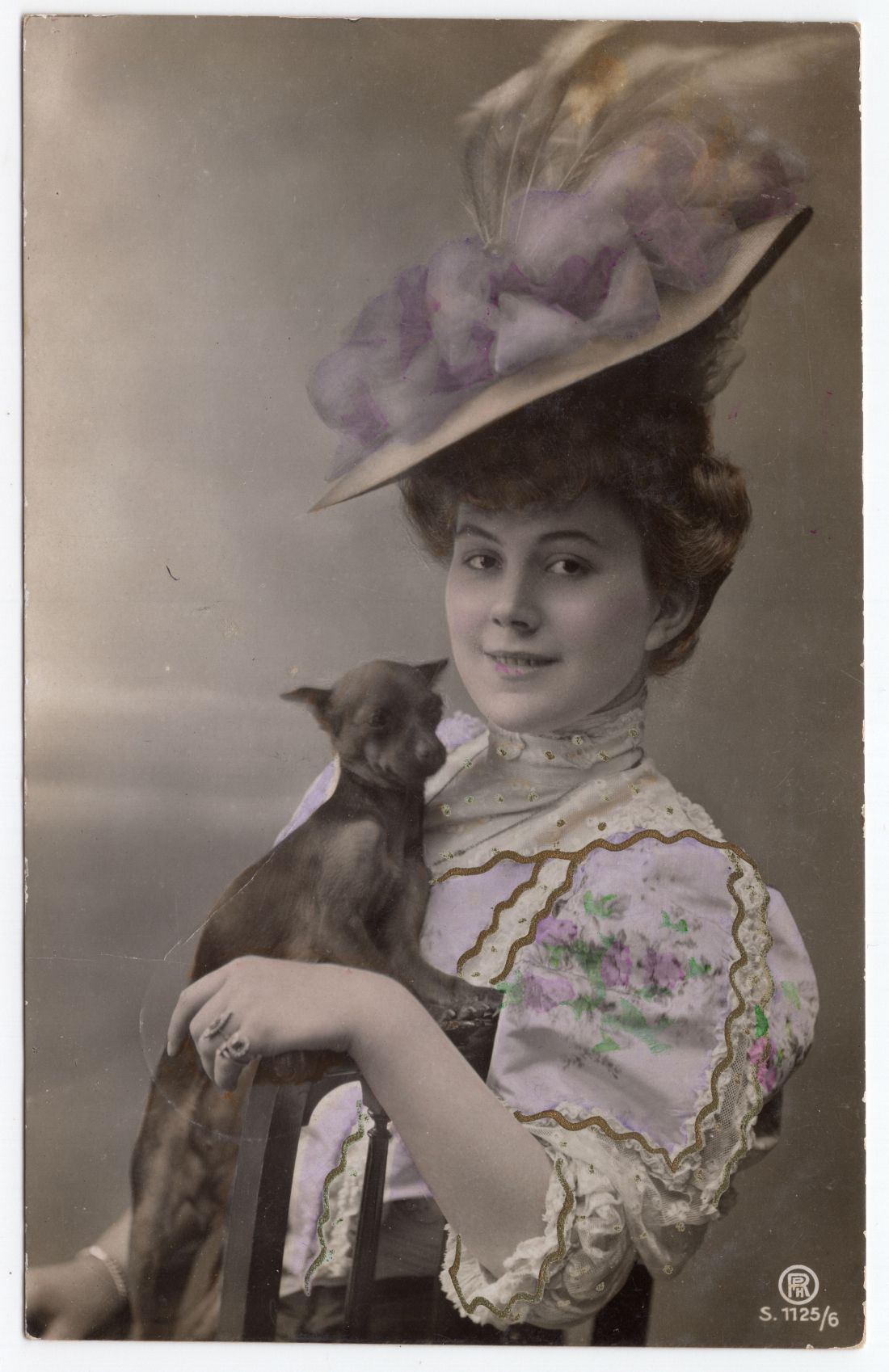 | PETS and OTHER ANIMALS Photographic and illustrator postcards featuring dogs, cats, and other animals were and are very collectible.
The selection tree at the left provides access to a sampling of this genre, with the Sperlich cards particularly well represented. |
`],["Photographers",`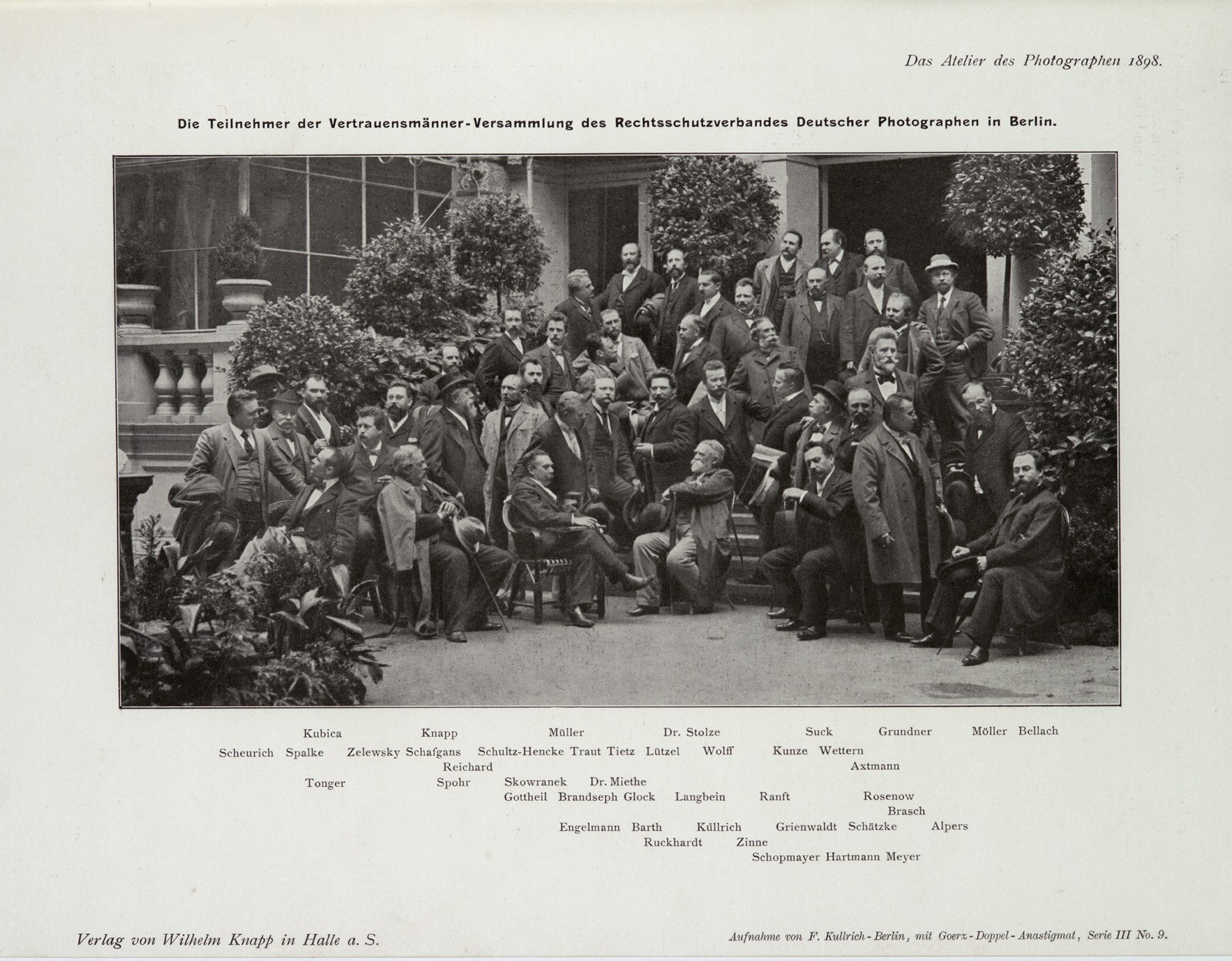 | PHOTOGRAPHERS
The majority of postcards do not credit the photographer who took the photo. Occasionally, however, they do. In some cases the photographer has been identified because the same photograph has been found in a magazine, on a cabinet card or elsewhere where the photographer's name is provided.
Presented as sub-topics in the selection tree are a number of photographers whose work is known to exist on postcards on this site, and other images for the photographer may be in these catalogs. They may be retrieved by entering a keyword, such as Reutlinger , in a search on the VGP search page.
The image at the left is a photo of German photographers from the 1898 Das Atelier des Photographen. Both Adolf Miethe and Heinrich Traut are pictured. The source for the photo is Wikimedia Commons -- A larger view of the card may seen there. |
`],["Pic-in-Pic",`
Pic-in-Pic
Displayed in this section are pairs of cards where an image on one card appears in smaller form as part of another card. |
`],["Pochoir",`
Pochoir
Pochoir is French for Stencil. Pochoir postcards are most associated with the artist Giovanni Meschini (1888-1977). Meschini was born in Rome and moved to Terni with his family as a child. He illustrated cards from Terni and for publishers in Milan. Post-WW1, with the idea of involving craftsmanship in postcard production, he set up the Ars Nova Studio which produced cards by applying series of stencils by hand. |
`],["Political",`
Political Cartoons
Political cartoons occur frequently on postcards and are a good area to form a collection if you are interested in the underlying history. Topics vary from major figures and events to affais of the moment. The examples here are from a collection made for a different purpose, of cards by different European publishers, and so give a fairly sketchy view of the possibilities. |
`],["Politics and Military.",`
`],["Premier Avril",`
`],["Pressed Flowers",`
`],["Publisher Sales Cards",`
`],["Purses",`
Purses
An interesting concept for collecting is selecting an element that may not be the main focus of a photograph and locating cards that contain that element. An example is the Purse collection featured here that provides just a few examples of the different card types (performers, fantasy, fashion, art, private mailings) on which purses can be found. |
`],["Q-",`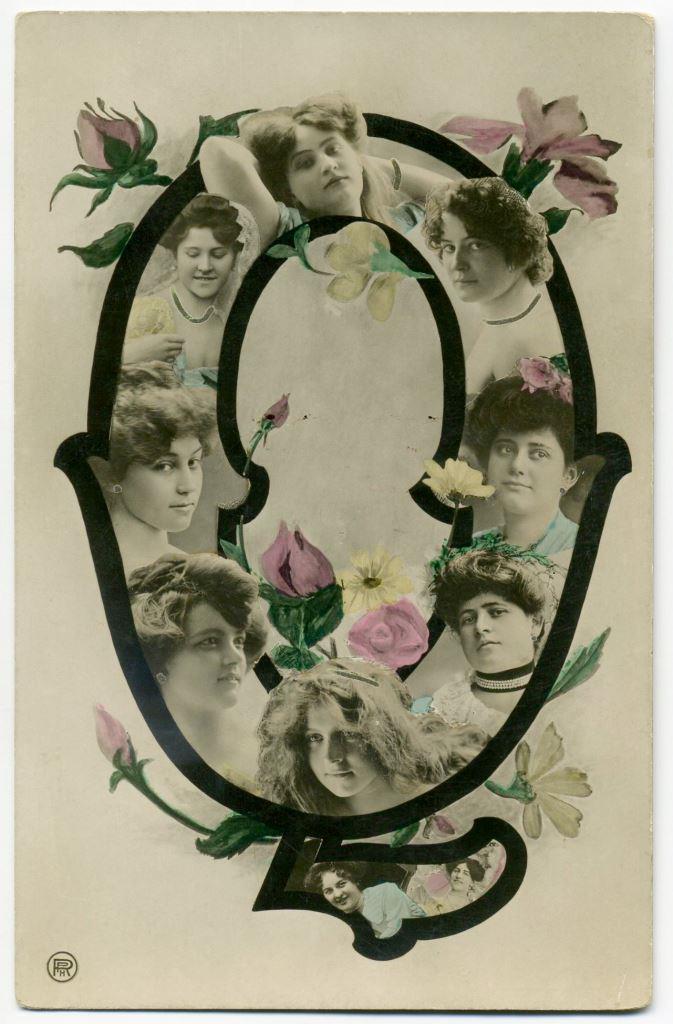 | - Initial Letter Q -
Currently there are no performers or other social figures whose family name begins with the letter 'Q' in this catalog.
The card pictured here was produced by Rotophot in the first decade of the 20th century. |
`],["R-",`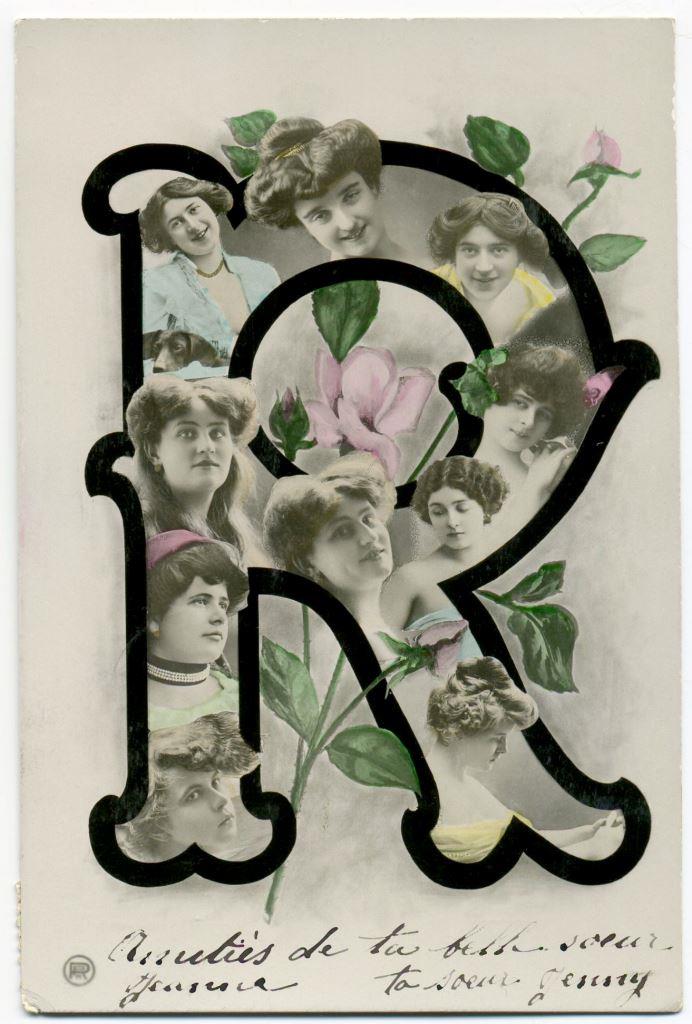 | - Initial Letter R -
Performers and other social figures whose family name begins with the letter 'R' may be accessed via the tree at the left. Where only a given name (or stage name) is known, that name is interspersed in the tree by its initial letter.
The card pictured here was produced by Rotophot in the first decade of the 20th century. Among the performers pictured on it are Elise de Vère, Lina Cavalieri, and Ada Battke. |
`],["RADFORD Wanda",`
Wanda Radford
Wanda Radford (1896-1982) was a child elocutionist, reciter, singer and dancer from Australia who performed on the stage in Australia, Germany, and Britain in the first decade of the 20th century. She also appeared in a few British silent films circa 1915, returning later to Australia where she became an artist and costume designer. Included in the cards below is one sample of her artwork.
Nick Murphy, the webmaster of the Forgotten Australian Actors website has documented her life at Wanda Radford - The Australian 'Wunderkind'. |
`],["Radios",`
`],["Real Hair Illustrations",`
| Real Hair - Illustrator Cards |
`],["Real Hair Photos",`
`],["Red Soiree",`
Red Soiree
Originally isssued in undivided form, unmarked; later issued in divided form as advert for Maison Henry Esders, a men's clothing firm. The background may well have been lighter or even white when the cards were issued, but I like the appearence as it is now. |
`],["REINWALD Grete",`
Grete Reinwald
Grete Reinwald (1902-1983) was one of the most popular child models in Germany. She appears hundreds of postcard series from various publishers. Grete was one of six Reinwald children, all of whom were involved in the entertainment industry. She and four of the other children, Irmgard, Elsbeth, Otto, and Hanni appear within Rotophot's and other postcard publisher series, often paired with one another. The eldest of the children, Julius, was a cinematographer who lost his life while filming in Africa.
In addition to being a tremendously popular child model, Grete also performed on the stage and in silent films from an early age. She accompanied her family to Denmark for the duration of WWI where she appeared in several films. Returning to Germany after the war, Grete reappeared on the scene, graduating from children's roles to adult supporting and then leading roles, performing in more than 70 silent films, and continuing to appear on the stage. Grete made the transition to sound films in the early 1930's, acting in secondary and minor roles in about 20 films through the war years, ending in 1957.
In 1933, with the rise of the Nazi party, Grete appeared in the film, Hans Westmar. Initially banned by Goebbels, the film was released only after substantial cuts. After the war, the film was added by the Allies to the Catalogue of Forbidden German Feature and Short Film Productions, prohibiting exhibition in Germany as 'purely party propaganda'.
Grete married her first husband, Gustel Sensburg, in 1921. Their son, Wilhelm August was born in 1924. Following the death of her first husband in 1932, Grete remarried Fred Louis Lerch, a fellow actor. They remained married until Grete's death in 1983. |
`],["REINWALD Hanni",`
Hanni Reinwald
Hanni Reinwald (1903-1978) was one of six Reinwald children, all of whom were involved in the entertainment industry. She and four of the other children (Irmgard, Elsbeth, Otto, and Grete) appear within Rotophot and other postcard publisher series, often paired with one another. The eldest of the children, Julius, was a cinematographer who lost his life while filming in Africa.
In addition to being a popular child model, Hanni performed on the stage and in silent films from an early age, with more than 20 films between 1913 and 1929. She accompanied her family from Germany to Denmark for the duration of WWI where she appeared in several films.In a 1914 review in the Danish Filmen, the critic wrote: "Also contributing was a second person,whom one might feel compelled to call an even greater artist, and it is small Hanni Reinwald.This child performs with a sweet childishness and an endearing naturalness. Her uniqueperformance ... is quite astonishing. We have seen many children on film - too many - and theyhave been more or less good, but it's rare that we have seen the naturalness of a child. There'sthis little girl, who even plays comedy, and whom you think is a little angel that has comedirectly from a pink cloud..." |
`],["REINWALD Otto",`
Otto Reinwald
Otto Reinwald (1899-1968) was one of six Reinwald children, all of whom were involved in the entertainment industry. He and four of the other children (Irmgard, Elsbeth, Grete, and Hanni) appear within Rotophot and other German publisher series, often paired with one another. The eldest, Julius, was a cinematographer who lost his life while filming inAfrica.
Otto appeared in about 35 films between 1913 and 1932. Several of the films were Danish, issued at the time the family relocated from Germany to Denmark during WWI. In his 1949 book on child stars, Alverdens Barnestjerne, Arnold Hending includes a quote from the Danish film director, Benjamin Christensen, describing his 1913 work with Otto: "There was a good portion of courage in him. One thing he feared: Water... In the scene, he was climbing along a horizontal beam over half meter of water. I could see his face turn green in terror, and he clung to me like a drowning man, his heart beating like a sparrow when you hold it in the palm of your hand ... Now I started wondering whether I shouldn't abandon these scenes, rather than torment the boy, but when I said this to him, his protests were characteristic. He would not give up, and a few minutes later, the images were in the box."
Kay Winger's Zwischen Bühne und Baracke notes that Otto was blacklisted by the Nazi's. While that information has not been confirmed by another source, no film entries have been found for Otto from 1932-1944. After WWII, film entries for him resume in movie production, with almost 25 films released through 1965. Otto died in 1968. |
`],["Rembrandt",`
Rembrandt
Besides the famous Amsterdam painter, there also used to be an interesting German photo studio called Atelier Rembrandt. Under this name, the photographers Else and Alfred Cohn created the stills for stage productions and some classic German silent films of the 1910s and 1920s. Their star portraits are likewise exquisite and were reproduced on many film star postcards at the time. Atelier Rembrandt was located at Brückenstrasse 6 b, near the Jannowitzbrücke in Berlin and was active between 1911 and 1936.
Narrative by: European Film Star Postcards |
`],["Reutlinger Studios",`
Reutlinger Studios
Léopold-Émile Reutlinger (1863–1937) was a Peruvian-born French photographer. His uncle, Charles Reutlinger, founded the family's photographic business in Paris, and his father was the photographer Émile Reutlinger. Léopold's son, Jean, was also a prominent photographer. Léopold worked as a photographer in Peru until 1883 when he entered the family's studio in Paris to assist his father who had been running it alone since 1880. Léopold took over the studio from his father after 1890.
Reutlinger studios specialized popular performer photos, fashion shoots, and advertising photos. The studio photographed stars of Paris' entertainment venues, including Moulin Rouge and the Folies Bergère. The photographs were regularly sold to magazines and newspapers and reproduced as postcards.
In 1891, Léopold's son, Jean, was born. In 1910, Léopold and Jean began to work together in the studio. Jean died in 1914 in World War I.
In 1930, Reutlinger suffered an accident which cost him an eye and seriously affected his profession; however, he continued to run the studio until his death in Paris in 1937.
Extracted from Wikipedia. |
`],["ROBERT Roby",`
Roby Robert
The three Robert Schmutzler postcards displayed below identify Robert as the 'Youngest Dancer and Actor in the World.' Secondary internet resources list a handful of films Robert acted in, with the first in 1919 and the last in 1929/30. The film program for one of the films (Ich hatte einst ein schönes Vaterland) assigns the female lead to the former child performer, Grete Reinwald, with Robert playing a young girl. They are pictured in their roles below in a clip from the program.
Robert shares similar facial and hair characteristics with the child model assigned the nickname, 'Crying Child', on the Vintage Thematic Postcards site.
No biographical information has been found for Robert. |
`],["Romeo and Juliet",`
`],["Ross Performers",`
`],["S-",`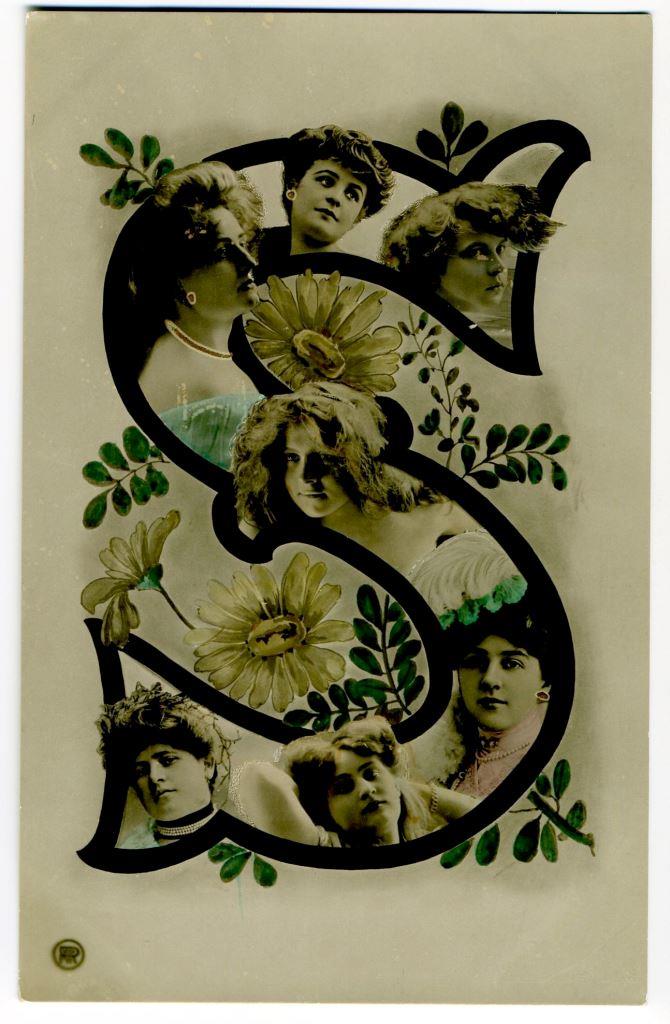 | - Initial Letter S -
Performers and other social figures whose family name begins with the letter 'S' may be accessed via the tree at the left. Where only a given name (or stage name) is known, that name is interspersed in the tree by its initial letter.
The card pictured here was produced by Rotophot in the first decade of the 20th century. Among the performers pictured on it are Lucie Gérard and Blanche Toutain. |
`],["Salut (Reunies)",`
`],["Sartony Paris",`
Sartony, Paris
Sartony was a French photo studio founded in 1885 that existed well into the 20th century and beautifully portrayed countless French stage and silent film stars. Sartony's studio, 'Photographe De Luxe', was first located at 16 Rue Duphot near the Boulevard de la Madeleine in Paris. The business prospered so the studio moved on to 45 Rue la Fayette, near the Opera, and was then sometimes credited as 'Sartony, Lafitte'.
An advertisement in the 1902 Anglo-American Annual - Paris describes the studio as the "only house in Paris having studios on the ground floor" with a specialty of Platinotype portraits and enlargements. Nearly 20 years later, a review in the 1920 American publication, Bulletin of Photography, reported that Sartony "does very good white ground work and also dark grounds. Photographs all important persons, kings, queens, princes, etc."
The cards displayed here represent the earlier years of the studio's work.
Sources: European Film Star Postcards, Anglo-American Annual - Paris and Bulletin of Photography |
`],["Sazerac",`
Sazerac
Sazerac's studios were described briefly in the 1905 Le Progres Moderne: "This artist has made a true specialty of producing artistic photographs of all kinds, beautiful pastels, and enlargements.
"A broad artistic education, a personal talent, and experience honed through long practice as the principal operator in one of our leading photographic houses, these are the distinctive marks of Mr. Roger Sazérac, 43 rue Saint-Lazare, in Paris, which he owes entirely to his persistent work. Furthermore, his works have been crowned with success by the awarding of the Grand Prize to him at the Exhibition in Liège, in 1905. This superb distinction makes it unnecessary for us to dwell any longer on the merit of his works."
Source: Gallica BnF. |
`],["Sculpture",`
Sculpture
Clay sculptures (rather, models) and bas-reliefs. These are items illustrating contemporary topics rather than art or museum objects. |
`],["Sewing Machines",`
`],["Sheet Music",`
Sheet Music
Postcards comprised of sheet music was a popular genre on early 20th century postcards. Presented here is a small selection of cards from publishers from several different countries. |
`],["Sophie Sperlich",`
Sophie Sperlich
The April-May 1910 Blätter für Gemaldekunde reported the death of Vienna-born painter, Sophie Sperlich, on 25 October (1909) in Munich. Sperlich is known for her charming paintings of cats and dogs, many of which appeared on postcards. Her signature on many of the paintings reads 'S. Sperlich, München'. No other information has been found, although some websites list her birth as 1863. That date has not been confirmed. |
`],["Souvenir de Nancy",`
`],["Stamp Collage",`
Stamp Collage
By the 1890s Chinese artists were saving cancelled postage stamps and creating postage collages on postcards, which they sold to tourists. Over the next thirty-plus years Chinese postage collage postcards were mailed all over the globe. (Russell Hahn, Postage Stamp Collage Art).
The genre expanded in popularity throughout the world. This selection presents a small sampling of the cards available, representing a number of countries, publishers, and topics. The selection documents the genre from each of the first five decades of the 1900's. It is comprised of cards made by individuals, including wounded soldiers; cards produced for charities; as well as cards produced professionally. |
`],["Stebbing Phot",`
Edward Stebbing
Edward Stebbing (1836-1915) was born in the English town of Bury St. Edmunds. While still a young man, Stebbing left England for France and Germany where he conducted his studies, becoming acutely interested in photography. After completing his university studies, Stebbing served as a Professor of English for 10 years at the French Association Philo-technique. While teaching, Stebbing continued his interest and research in the field of photographic chemistry, including color photography.
Over a period of 25 years, Stebbing also collaborated in the process of practical photography, owning a dry-plate factory which was destroyed by fire in 1887 and inventing the earliest roll-film ('Stebbing') camera.
In 1890, Stebbing opened a photography studio in Paris. He photographed many theatrical stars, with his photos appearing in magazines and on postcards by such publishers as G. Piprot and Étoile in the earliest years of the 20th century. The Photographic Times and American Photographer (1883) cited Stebbing as 'one of the bright lights of the French Photographic Society, very much respected and thought of, and very useful to the fraternity there'.
Stebbing died in Paris in 1915.
Details for this narrative were extracted from a 6 Apr 1907 article in the American Register which was accessed via the British Newspaper Archive. |
`],["Susie",`These illustrations by Susie must have been part of a campaign as they were produced by Librairie d'Education Nationale, 9 Rue Hautfeuille, Paris. This publisher produced many cards in non-postal format with informative material on the reverse, as well as postcards and books.`],["Swift's Pride",`
Swift's Pride Soap and Washing Powder
Illustrator Grace (Wiederseim) Drayton created a series of Wednesday's Child advertising cards for Swift's Pride Soap and Washing Powder. An advertisement in the Sept. 1907 Ladies' Home Journal announced: 'A set of seven of these handsome post cards . . . will be sent to any address on receipt of two 2 cent stamps. The drawings are by Grace Wiederseim, the well known artist, who created the famous Sun-Bonnet Babes.' Drayton also designed the Campbell Soup Kids. |
`],["T-",`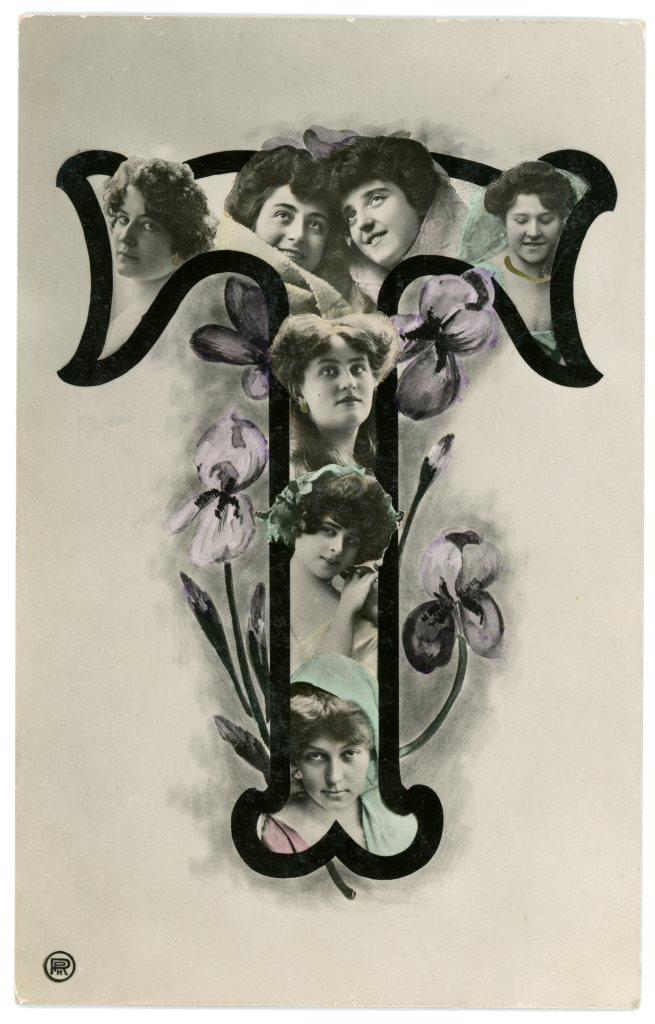 | - Initial Letter T -
Performers and other social figures whose family name begins with the letter 'T' may be accessed via the tree at the left. Where only a given name (or stage name) is known, that name is interspersed in the tree by its initial letter.
The card pictured here was produced by Rotophot in the first decade of the 20th century. Among the performers pictured on it is Elise de Vère. |
`],["Talbot",`
Talbot
The Musée des Arts Décoratifs in Paris holds a collection more than 3000 photographs from the Photographies du Studio Talbot. In the description of its collection, the Musée notes that Talbot was among the best known photography studios before the war, sharing the majority of the credits for fashion photographs of the period with Reutlinger, Félix, and Manuel. Talbot's activity is documented through photographs published in the press as early as 1911. Around 1930, it became the Keystone-Talbot studio, retaining its address at 25 rue Royale, in Paris.
Source: The Musée des Arts Décoratifs. |
`],["Technology and transport.",`
`],["Telephones",`
`],["Toiletries",`
`],["Toned",`
`],["Topics",`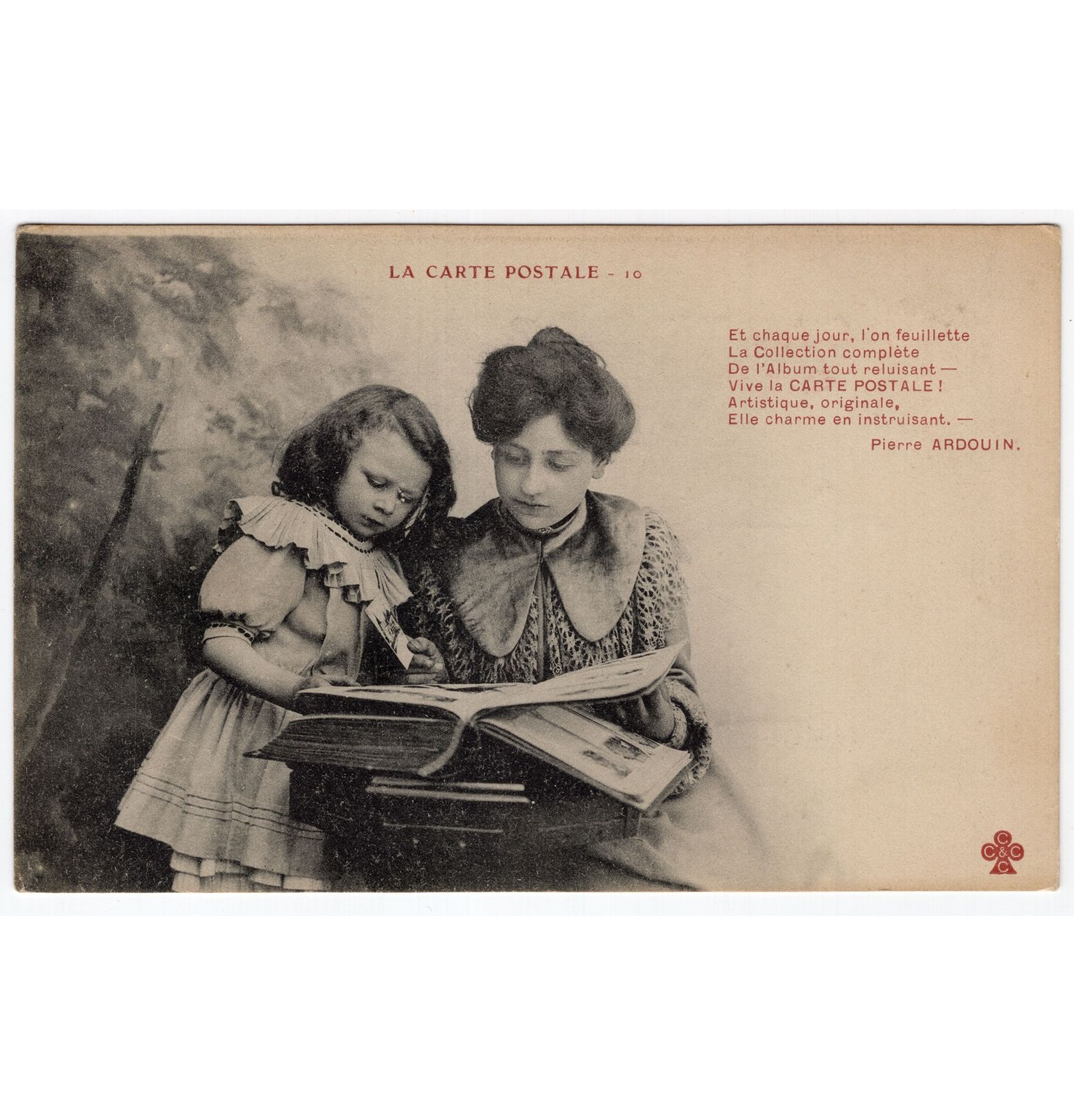 | TOPICS Welcome! A selection of postcards to browse through!If you are new to postcards, or have concentrated on scenes and places, you may find a subject here that attracts you enough to start a collection. Or you may just like to see the variety of subjects which have appereared on cards. The cards are nearly all ones produced in Europe before the First wold War and include both photographic and illustrated cards. Some topics are covered very lightly, and some in more depth, reflecting our developing interests; new topics are added fairly frequently. Many of these cards are displayed courtesy of Historical Picture Postcards - Osnabrück University. |
`],["Torn Paper",`
`], ["Toy Town Tavern",`
Toy Town Tavern
The Toy Town Tavern resort opened in 1912 in Winchendon, Massachusetts USA. Large gay, colorful murals featuring nursery rhyme characters were displayed on the dining-room walls. The 1958 Treadway Inns Cookbook [Anne Roe Robbins] noted the paintings were executed by Mrs. Hershey, who at one time decorated nurseries for Jordan Marsh. The property was sold to The Winchendon School in 1961.
Promotional postcards depicting the resort and its murals were sold to vacationers, many of whom wrote messages to friends and family on them. Samples of this use are included below./Font> |
`],["Toys, Puppets and related topics",`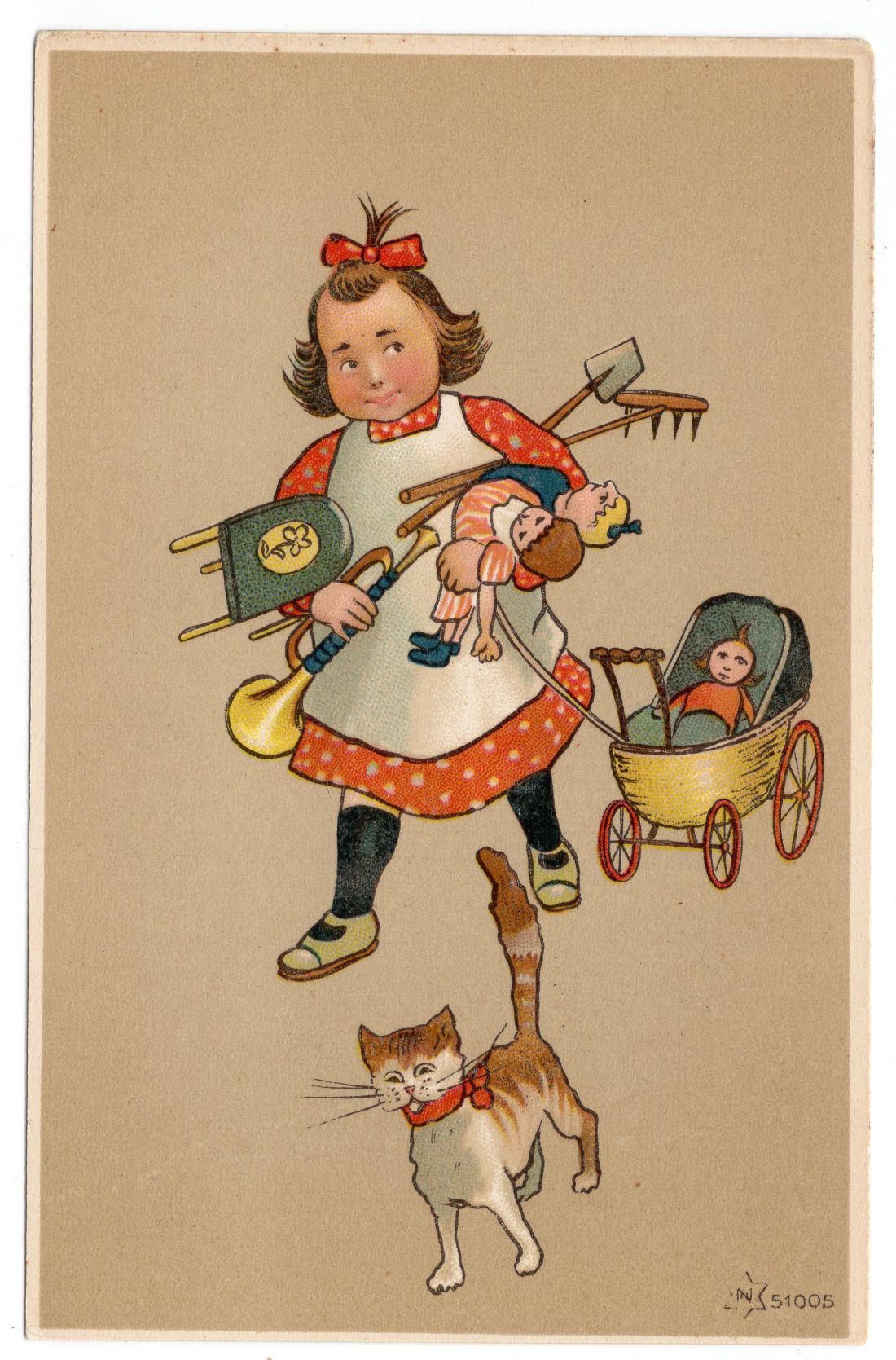 | TOYS and RELATED TOPICS There is a wide variety of vintage postcards where toys and games are featured on the card, both as the dominant theme of the card and as a supplemental item on the card. The selection tree at the left provides access to a very small representation of photographic cards in this topic.
The card at the immediate left is but a single sample of a whole other genre in the topic of toys -- Illustrator cards featuring toys.
The related topic of 'First Day of School' cards, an extremely popular genre circa 1920, is included at the end of the selection tree. |
`],["Trains",`
Trains
We don't have the kind of pictures train ethusiasts might be looking for, rather illustrations and cartoons. There are many cigarette cards of specific locos on this related site. |
`],["Traut",`
Heinrich Traut
"In Munich, on May 31, a few days after his 83rd birthday, the grand master of photography, Heinrich Traut, died. He enjoyed widespread renown in professional circles for his numerous inventions and practical innovations. Originally destined for a teaching career, he turned to photography at a young age, working as a journeyman in many workshops, including those of the well-known photographers Risse (Dortmund) and Albrecht (Munich), and was manager of the famous Reutlinger studio (Paris). In 1891, Traut established his own business in Munich.
"[Traut] was a member of the Chamber of Experts for Photographic Works and the Munich Master Examination Commission. In 1877, he designed the first studio shutter; in 1885 a viewfinder camera; and in 1889 his universal lens ring followed. In 1901, the first usable photographic lamp, the Simplizissima, appeared, followed around 1918 by the pocket arc lamp Minima and the very popular enlarging and reducing device Traut-Simplex.
'[Traut] authored numerous valuable treatises on the practicalities of professional photography, several of which have also appeared in earlier issues of our journal. He remained professionally active until the last years of his life."
Source: The Allgemeine photographische Zeitung obituary at the Österreichische Nationalbibliothek. Translation by Google Translate. |
`],["Typewriters",`
`],["U-",`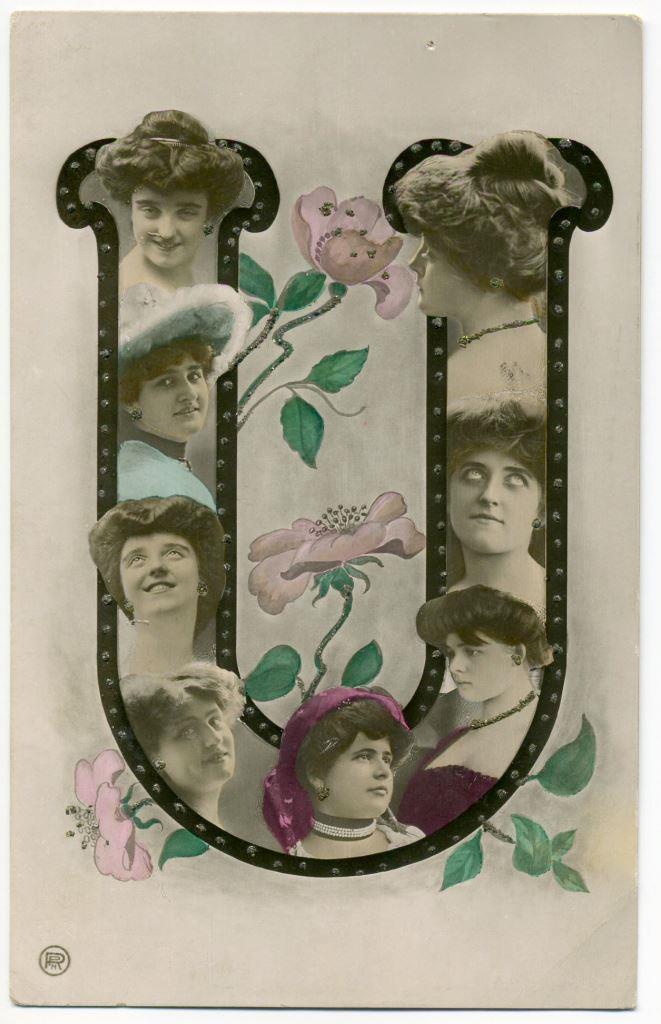 | - Initial Letter U -
Performers and other social figures whose family name begins with the letter 'U' may be accessed via the tree at the left. Where only a given name (or stage name) is known, that name is interspersed in the tree by its initial letter.
The card pictured here was produced by Rotophot in the first decade of the 20th century. Among the performers pictured on it is Ada Battke. |
`],["Undivided Cards",`| UNDIVIDED CARDS For the early history of postcards see here or Wikipedia, but postcards as we know them really got going in the 1880s and particularly the 1890s. At that time one side of the card was reserved for the address (nowadays often referred to as the verso, though postal authorities regard this as the front of the card). Everything else - the picture, message and sender's signature - had to be on the other side. Images had to leave space for a written message.
In 1902, the British Post Office allowed messages to be written on one half of the address side. These cards are "divided back" cards. Images expanded to fill the whole of the other side. As other countries agreed to this, cards with messages on the address side could be sent there; this was eventually agreed at the Sixth Postal Union Congress in Rome, in 1906. USA and Japan were among the last to agree. The earlier cards became known as "undivided back" cards. French sites call them "precurseurs". French users would write all over the card anyway so often there is little white space on early French cards.
From early days French regulations allowed the stamp to be on either side of the card - some are folded over the edge. Only the French seem to have stuck stamps over the images, sometimes in the worst places.
Many countries had cheaper postage rates for "printed matter" or material without a message, so you find many postcards with the printed "Postcard" line crossed out and cheaper stamps used. This happens for both divided and undivided cards.
All the early cards on this site, relative to the dates above, will be undividied cards. Most are photograpic cards. This section shows illustrated cards with some account of their evolution.
A web site that shows examples of many publishers of undivided cards is undividedbackpostcard.com. |
`],["Une Depeche Urgente",`
`],["V-",`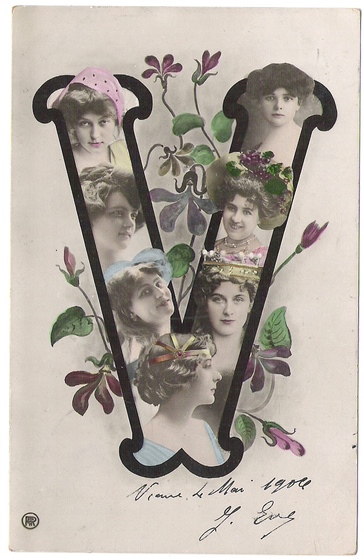 | - Initial Letter V -
Performers and other social figures whose family name begins with the letter 'V' may be accessed via the tree at the left. Where only a given name (or stage name) is known, that name is interspersed in the tree by its initial letter.
The card pictured here was produced by Rotophot in the first decade of the 20th century. Among the performers pictured on it are Geraldine Farrar and Suzanne Miéris. |
`],["Varischi and Artico Milano",`
Varischi and Artico, Milano
In 1900, Arturo Varischi and Giovanni Artico assumed ownership of the L. Ricci portrait studio in Milan, Italy, where they had both trained as employees. The Ricci studio had a long history of portraiture service for the prominent citizens of the city, having operated a daguerreotype business prior to 1850. Varischi & Artico Company shared their business location with Angelo Pettazzi, an established merchant and producer of photographic equipment and supplies since 1871.
Varischi & Artico gained a reputation for infant portraits and for their ability to attract famous musicians, singers, actors and writers to their studio. The renowned stage performers who appeared at La Scala theatre came to the studio for their publicity and souvenir photographs and picture postcards. The majority of Varischi & Artico images can be documented between the years 1900 and 1920.
Source: European Film Star Postcards. |
`],["W & D Downey",`
W & D Downey
W & D Downey's London studio was first recorded in the London Post Office Directory in 1872 on Ebury Street in London. It was last record in the directories in 1941. Holding two Royal warrants, Downey was popular and regularly photographed members of the Royal family. This Royal patronage assisted the firm which grew to be one of the premier society photographers of the late nineteenth century. Their London location was important in attracting aristocracy, politicians, celebrities, and other social figures.
Source: Encyclopedia of Nineteenth-Century Photography. |
`],["W-",`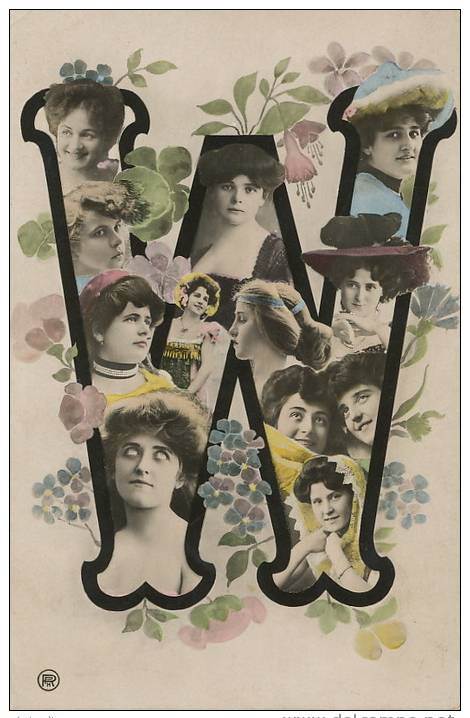 | - Initial Letter W -
Performers and other social figures whose family name begins with the letter 'W' may be accessed via the tree at the left. Where only a given name (or stage name) is known, that name is interspersed in the tree by its initial letter.
The card pictured here was produced by Rotophot in the first decade of the 20th century. Among the performers pictured on it is Liane de Vries. |
`],["Walery (Stanislaw Ostrorog)",`
Walery
Stanisław Julian Ignacy Ostroróg (1863-1929) also known as Walery (after his mother's given name) was a Polish photographer active in London and Paris between 1890 and 1929. After inheriting his father's photographic studio in London, he continued with portraiture for about a decade until the turn of the century when he moved to Paris. There he achieved celebrity as an innovator and accomplished photographer of cabaret stars and of the female form.
Stanisław junior was inspired to learn photographic techniques by his father, briefly working alongside his father who had studios in both London and Paris, and also travelling to Mexico and Africa. After his father's death, Stanisław junior went into partnership with the English theatrical photographer, Alfred Ellis. They began trading as Ellis & Walery from new premises in Baker Street. Around 1900, Stanisław junior opened a Paris studio in his father's former premises where he initially specialized in theatre and cabaret artists including Mata Hari. As his French business prospered he gave up his London interest in 1908.
In the 1920s Stanisław junior focused on art photography and experimented with the figure of the model. During this period he used the pseudonym 'Laryew'. He achieved the greatest acclaim with his series of photographs of Josephine Baker, published in 1926. He also produced studies of the female nude destined for anatomy and art students.
Stanisław junior died in Paris in 1929. After his death, the studio was taken over by Charles Auguste Varsavaux.
Narrative extracted from a more complete biography at: European Film Star Postcards. The Josephine Baker postcard below is displayed courtesy Marlène Pilaete. |
`],["WALLY",`
Wally
Wally was an exceedingly popular German postcard model, appearing on thousands of postcards. The limited information known about her was reported in a Leslie-Judge folio portrait circa 1913 which read:
Miss Wally, who carefully conceals her family name, is known as the prettiest and most sought-after model in Germany. She was originally on the stage, playing children's roles in the Deutschea Theatres, under Prof. Max Reinhart, the 'Belasco of Germany' . . . Prof. Reinhart took special interest in Miss Wally and gave her dramatic instructions, but soon she left the stage when she found that posing for photographers was her real vocation, paid her better and gave her a more agreeable life. She is now engaged by Ernst Schneider, the foremost German photographer, and poses every day for twenty or thirty photographs. Her portrait has become known all over the world, and it can safely be said that no other model has ever reached similar popularity. Miss Wally is said to receive a yearly salary of $9,000. She was born and brought up in Berlin.
The 1908 Neuer Theater Almanach entry for the Deutsches Theater in Berlin identifies Max Reinhardt as the owner and director. The Kinderollen section for the theater includes Wally Pietschel. Neither the 1907 nor 1909 Almanach show the same listing. Additionally Wally Pitschel is listed in Heinrich Huesmann's Welttheater Reinhardt (1983) in Midsummer Night's Dream, playing the Fairies roles of Spinnweb (April 15, 1907) and Bohnenblüte (October 2, 1907). No further information has been found to confirm the connection of Wally Pitschel to Wally the postcard model.
Wally frequently is posed in solo portraits, but also regularly appears paired with others -- Grete and Hanni Reinwald, Ally Kolberg, Kläry Lotto and several as yet unidentified men, women and children.
Wally's name identification was made by California collector, Crystal Glantz. |
`],["WALTER Angelika",`
Angelika Walter
An extract from a 1905 German theater publication provides what little information we've found relating to Angelika Walter. It reads:
"The cheerful afternoon recently took place for a good cause in the magnificent hall of the Reichshof. . . The program featured two original stars, namely 4-1/2 year old Angelika and 8 year old little Radford from Sydney (Australia), the former being the smallest German soubrette. The adorable, charming little child performed Gêne Chansons without any trace of effort, as far as one can claim singing such songs, and performed so delightfully that the audience raved with joy. A completely different genre soubrette is the little Radford. She sings English, but how! An Yvette Guilbert in miniature! One should hardly think it possible! The 8-year-old girl, brunette with black fiery eyes, mimes like an old woman. Graceful in every movement, even refined in her facial expressions. I am not usually a fan of the Wunderkinder, but Angelika and Radford, the smallest soubrettes on the world's stages, fascinated me and delighted the audience to the highest degree."
Source: 'Berlin amüsiert sich', von Oscar Klein in Bühne und Brettl: No. 11, Jahrg V. Translation by DeepL |
`],["Walter Schachinger",`These red chalk drawings are from a series of portraits by Walter Schachinger, who was active on the Munich art and music scenes 1920s to 1940s, see the German Wikipedia. The series which appear on postcards may be a product of his special exhibition in Amsterdam in 1920.`],["Watches",`
Pocket Watches
Signed H. Manuel |
`],["WELLS Irène",`| Irène Wells was a popular vaudeville, stage and screen actor, singer and dancer whose documented career spanned the years of 1919 through 1930. An interview in the 1925 L'officiel de la mode provides the following description: "Surprisingly short blond hair -- a natural blonde -- rich in various shades of gold – sometimes vibrant, sometimes tempered -- a very sweet smile and innocent blue eyes that love candor -- a voice colored with a British accent -- All appear as Irène Wells." This selection is from the collection of Ruth Anne Wilson [1949-2023]. |
`],["Willinger",`
Willinger
Hungarian-born photographer Laszlo Willinger (1909–1989) is most noted for his Hollywood star portraits of the 1930s and 1940s. Less well known are the photos of film and stage actors taken by Willinger and his photographer mother, Margaret, in Berlin in earlier years. A few of their stage photos are presented below. It is unknown whether Laszlo or Margaret is responsible for the photos.
A more extensive narrative about Willinger may be found at European Film Star Postcards. Date Retrieved: 23 Dec 2023. Laszlo's father, Wilhelm, also was a photographer. It is possible that some of the photos in this catalog were taken by him. |
`],["X-",`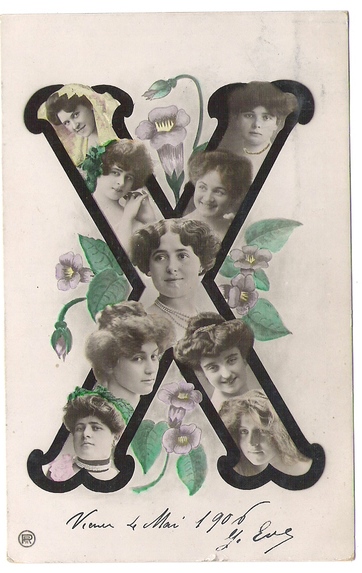 | - Initial Letter X -
Performers and other social figures whose family name begins with the letter 'X' may be accessed via the tree at the left. Where only a given name (or stage name) is known, that name is interspersed in the tree by its initial letter.
The card pictured here was produced by Rotophot in the first decade of the 20th century. Among the performers pictured on it are Elise de Vère and Liane de Vries. |
`],["Xavier Sager",`I am tempted to write "Xavier Sager, the well-known illustrator of fashionable women ...". But he also illustrated many other subjects, usually in a light-hearted manner. Surprisingly, not much seems to be known about him.`],["Y-",` | - Initial Letter Y -
Performers and other social figures whose family name begins with the letter 'Y' may be accessed via the tree at the left. Where only a given name (or stage name) is known, that name is interspersed in the tree by its initial letter.
The card pictured here was produced by Rotophot in the first decade of the 20th century. |
`],["Young Performers.",`
Young Performers
Most vintage postcards of children do not specifically identify the child by name. Over the years, however, collectors have found that several of these seemingly anonymous children were actually stage and film performers as well as postcard models.
The Ross Performers sub-topic in the selection tree features children who were performers but who were not known to be postcard models as well. |
`],["Z-",`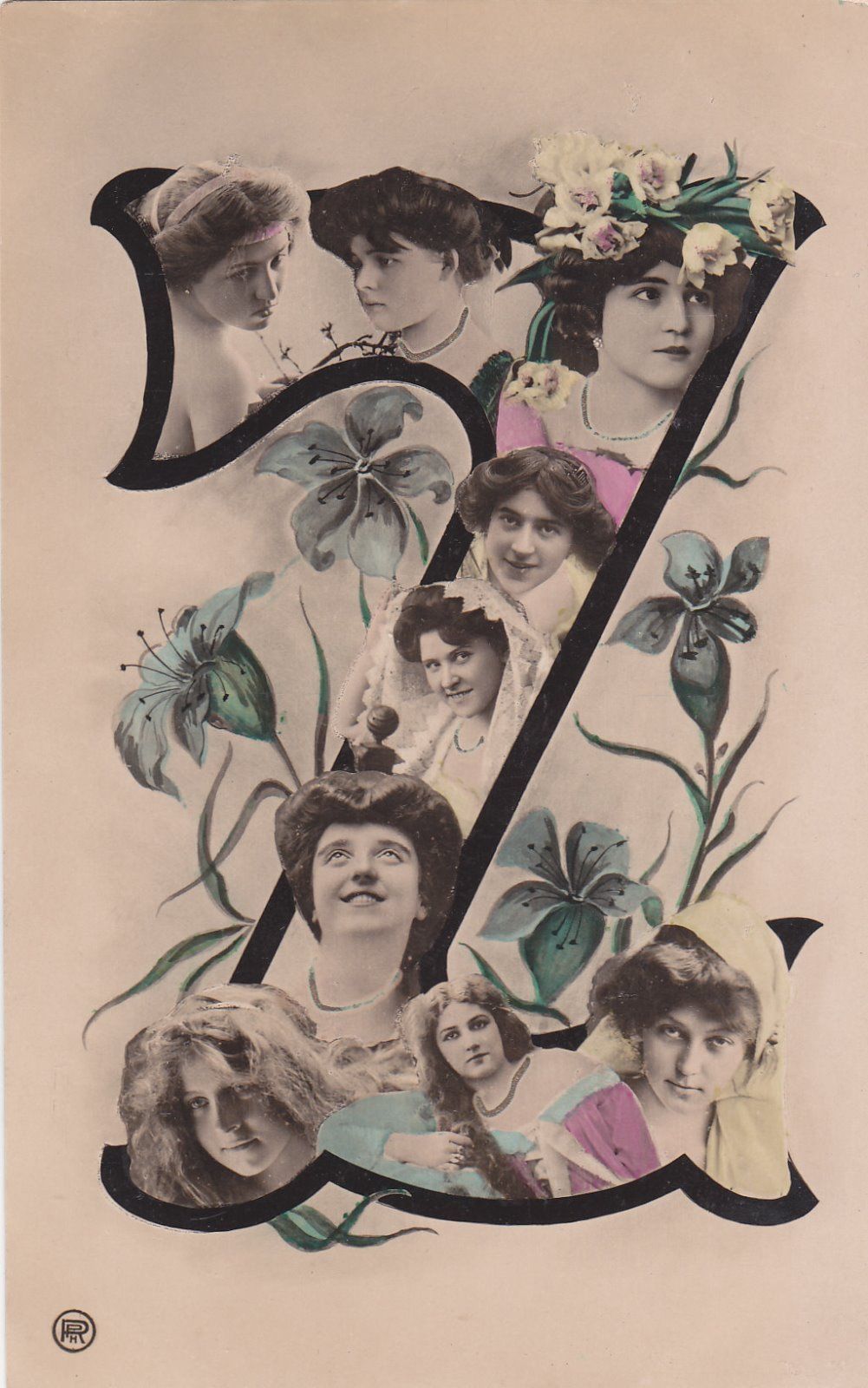 | - Initial Letter Z -
Performers and other social figures whose family name begins with the letter 'Z' may be accessed via the tree at the left. Where only a given name (or stage name) is known, that name is interspersed in the tree by its initial letter.
The card pictured here was produced by Rotophot in the first decade of the 20th century. |
`],) |
|